


Blurb
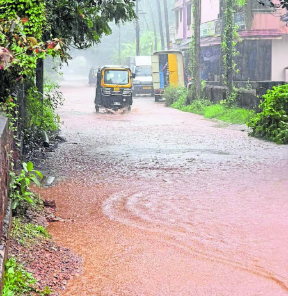
Brahmavar road faces severe waterlogging due to poor drainage maintenance, disrupting traffic and daily movement during monsoon rains and affecting commuters heavily.
Brahmavar
Continuous rainfall has led to severe waterlogging on the Sastan–Kodi connecting road in Brahmavar, causing major inconvenience to commuters and residents. Even light showers have been enough to submerge stretches of the busy route, disrupting traffic movement and daily travel.
Locals said the situation has worsened due to poor maintenance by the Public Works Department (Public Works Department Karnataka), which allegedly failed to clear drainage channels before the onset of the monsoon. As a result, rainwater is accumulating on the road instead of draining properly.
Residents pointed out that the road, which is a key link between Sastan and Kodi, sees heavy daily traffic, including passenger vehicles and container lorries serving the fishing and trade sectors. However, the narrow stretch combined with stagnant water has made commuting hazardous and slow.
Locals also complained that in many sections, roadside drains are either missing or clogged with silt, preventing proper water flow. They said that during previous years, pre-monsoon maintenance helped reduce flooding, but such preventive work was not carried out this time.
According to residents, the condition has led to repeated traffic congestion, with vehicles struggling to pass through waterlogged portions. Pedestrians are also affected, often getting splashed with muddy water as heavy vehicles pass by.
The road reportedly had an allocated maintenance budget of several lakh rupees, but residents allege that the contractor has failed to complete necessary drainage and repair work despite the monsoon already beginning.
Locals have urged authorities to immediately repair drainage systems, desilt existing channels, and ensure proper water outflow to prevent further disruption. They warned that if the situation continues, it could worsen during heavier rainfall spells, severely impacting transport and local livelihoods.