


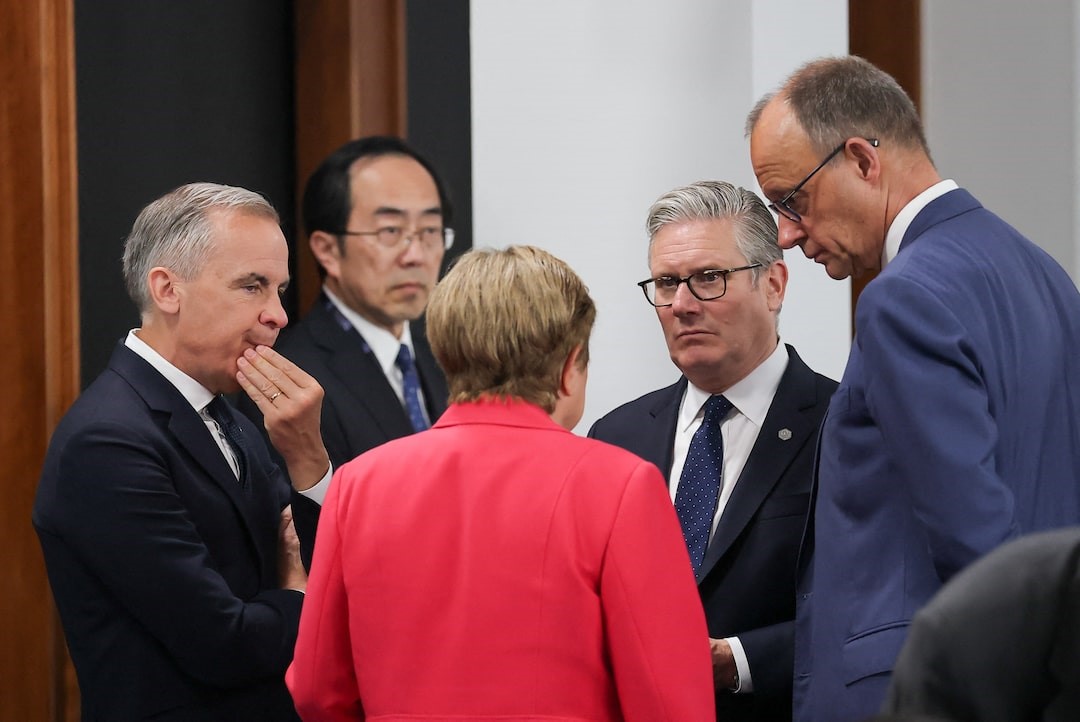
Intro: G7 nations endorsed diplomatic efforts, urged regional stability, and sought alternative energy routes amid tensions.
EVIAN-LES-BAINS
Leaders of the Group of Seven (G7) countries on Wednesday called for a ceasefire in Lebanon and pledged to diversify global energy supply routes to reduce dependence on the strategically important Strait of Hormuz.
The announcement came as world powers welcomed an interim agreement between the United States and Iran aimed at ending months of conflict and creating a pathway toward a permanent peace settlement.
The G7 summit was held in the French resort town of Evian-les-Bains, located on the shores of Lake Geneva. Discussions were dominated by the ongoing crisis involving Iran and the wider Middle East. Leaders gathered as details of a ceasefire arrangement between Washington and Tehran gradually emerged ahead of its expected formal unveiling in Switzerland later this week.
According to officials, the interim agreement is intended to launch broader negotiations that could eventually bring a complete end to the war. The conflict has reportedly claimed more than 7,000 lives, with the majority of casualties occurring in Iran and Lebanon. The humanitarian impact of the war has raised growing concerns among the international community and intensified calls for a lasting resolution.
In a joint statement, G7 leaders emphasized the importance of continued negotiations and stressed that any final settlement must address concerns surrounding Iran’s regional activities and nuclear ambitions. The statement reiterated the group’s position that Iran must never acquire a nuclear weapon and called for diplomatic efforts to ensure long-term stability in the region.
The summit also provided an opportunity for United States President Donald Trump to present the framework of the agreement to fellow leaders from Britain, Canada, France, Germany, Italy, and Japan. While these countries largely share concerns regarding Iran’s nuclear program, many had previously expressed reservations about the decision to engage in military conflict.
The leaders signaled their readiness to support implementation of the accord. A coalition led by Britain and France is expected to assist in securing international shipping routes once the Strait of Hormuz reopens, which is anticipated later this week. The waterway remains one of the world’s most critical energy transit corridors.
The memorandum of understanding signed by Washington and Tehran reportedly extends an earlier ceasefire by an additional 60 days, allowing negotiators time to pursue a permanent truce.
BOX
G7 leaders reaffirm support to Ukraine, tighten Russia pressure
EVIAN-LES-BAINS
Leaders of the Group of Seven (G7) nations on Wednesday presented a united front in support of Ukraine, signaling stronger backing for Kyiv while discussing additional measures to increase pressure on Russia.
The developments came during the G7 summit held in the French resort town of Evian-les-Bains, where global security, economic stability, and ongoing geopolitical conflicts dominated the agenda.
United States President Donald Trump drew attention during the summit when he jokingly remarked, I’m the boss, while joining fellow leaders at a session focused on global economic security.
Although made in a light-hearted manner, the comment reflected the significant influence Washington continues to wield within the alliance as major powers coordinate responses to international crises.
The summit produced a joint statement emphasizing support for Ukraine at a time when the country has reported improved battlefield performance against Russian forces. Ukrainian President Volodymyr Zelenskiy and his allies arrived at the gathering seeking to convince Western partners that Ukraine’s military efforts have strengthened its position and that Moscow should not be allowed to dictate the terms of any future peace agreement.
The statement is being viewed as a diplomatic boost for Kyiv and a sign that the United States may be taking a firmer stance toward Russia. For several years, Trump had been perceived as skeptical of some arguments advanced by Ukraine and its supporters. However, remarks from several leaders suggested that Washington’s position may be evolving in response to recent developments on the ground.
Canadian Prime Minister Mark Carney said there had been a noticeable shift in the American approach, describing it as tougher toward Russia and more aligned with the realities of the conflict. His comments reflected broader optimism among Ukraine’s allies that greater unity within the G7 could strengthen efforts to secure a favorable peace settlement.
Despite the positive signals, questions remain regarding future American actions. Observers are closely watching whether Washington will maintain restrictions on Russian oil exports and continue supporting sanctions designed to limit Moscow’s financial resources. The possibility of direct talks between Trump and Zelenskiy during the summit also remained uncertain.
In addition to discussions on Ukraine, G7 leaders welcomed the preliminary peace agreement recently signed between the United States and Iran. They pledged support for implementing the accord and highlighted the importance of securing global energy supplies.
The leaders committed to diversifying energy routes, reducing reliance on the Strait of Hormuz, and increasing strategic reserves to protect against future disruptions.