


Texas
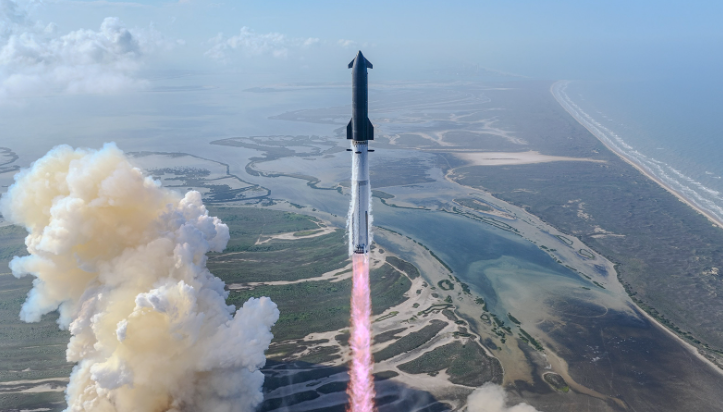
SpaceX conducted the twelfth major test flight of its Starship V3 system from its Starbase facility in Texas, marking another step in the company’s effort to develop a fully reusable deep-space launch vehicle. The launch took place after a brief weather delay and proceeded through early ascent phases as planned, according to initial mission updates.
The Starship system, developed by SpaceX, is designed for long-duration missions including future lunar and Mars exploration. The V3 iteration includes design refinements aimed at improving structural efficiency, engine reliability, and thermal protection during reentry. Engineers monitored key milestones such as stage separation, booster return, and spacecraft trajectory stability during the test sequence.
This twelfth integrated flight test is part of a broader campaign to validate full reusability, a core objective of the Starship program. Data gathered from each mission is used to refine hardware and software systems, with particular focus on landing precision and heat shield durability under extreme atmospheric conditions. The company emphasized iterative testing as central to accelerating development timelines.
SpaceX’s rapid test cadence has positioned it as a leader in commercial spaceflight innovation, while also contributing to broader industry competition in reusable launch systems. The Starship program remains central to future plans for satellite deployment, lunar missions under NASA’s Artemis program, and eventual interplanetary transport capabilities.
Officials and engineers continue to evaluate telemetry data to assess performance across all flight stages, including propulsion efficiency, structural integrity, and controlled descent outcomes. The Starship V3 test campaign is expected to inform future design improvements and regulatory certification milestones. Space exploration analysts note that sustained testing is critical for achieving operational reliability in heavy-lift reusable rockets. Further test flights are anticipated as SpaceX advances toward full mission capability for orbital operations and deep-space exploration objectives. Results will guide next development phase decisions ahead.