


Intro
Prof. Sunil explained that terrestrial TV signals, decoded by Tejas Networks’ chipset, deliver multimedia to mobile devices, bridging the digital divide and aiding emergency alerts in remote areas
KALABURAGI
A new Direct-to-Mobile broadcasting technology developed by IIT Kanpur is set to transform the way digital content is delivered, said Prof. Sunil at a seminar in the city.
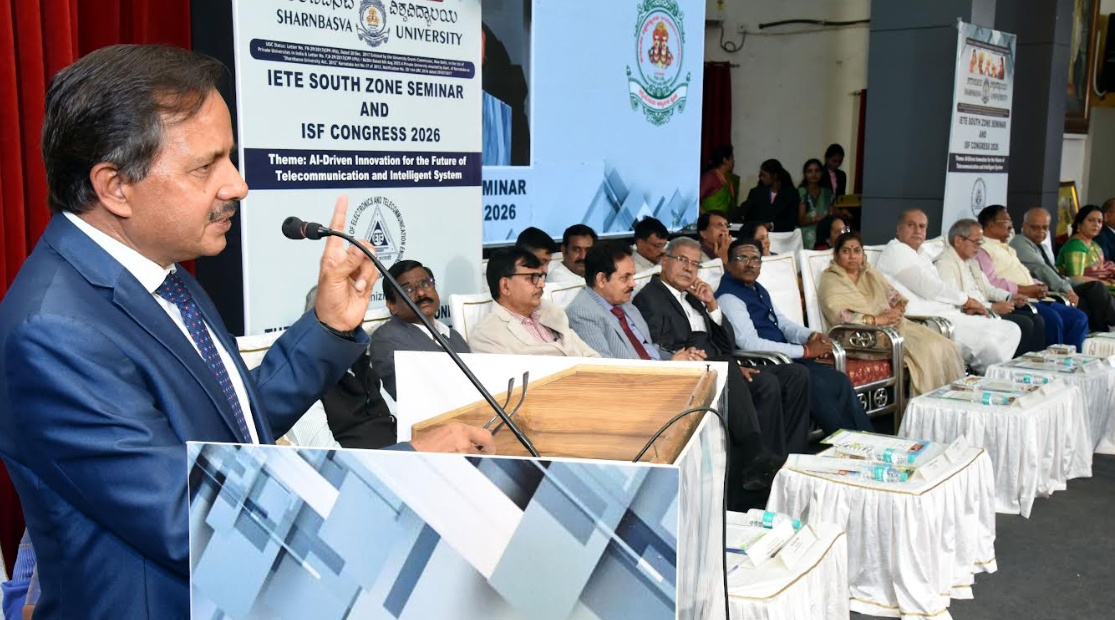
He was speaking after inaugurating the IETE South Zone Seminar and IETE Student Forum Congress-2026 at Sharnbasva University. He explained that the new technology allows live TV programs, educational content and emergency alerts to be delivered directly to mobile phones without the need for internet connectivity.
Prof. Sunil said the system uses terrestrial TV broadcast signals to send multimedia content. Mobile devices equipped with a special receiver chip can access this content, similar to traditional television signals. The technology uses an indigenously developed chipset by Tejas Networks, which helps decode the signals efficiently.
Highlighting its importance, he said the innovation will help bridge the digital divide, especially in rural and remote areas where internet access is limited. It can also play a vital role in disaster management by sending emergency alerts directly to people.
He emphasized the need for self-reliance in technology and said initiatives like “Make in India” should expand beyond manufacturing to research and development. He pointed out that such innovations reduce dependence on foreign technologies.
The technology is also being integrated into smartphones and laptops, enabling wider access. Experts believe this advancement will greatly benefit education, communication and public safety systems across the country.