


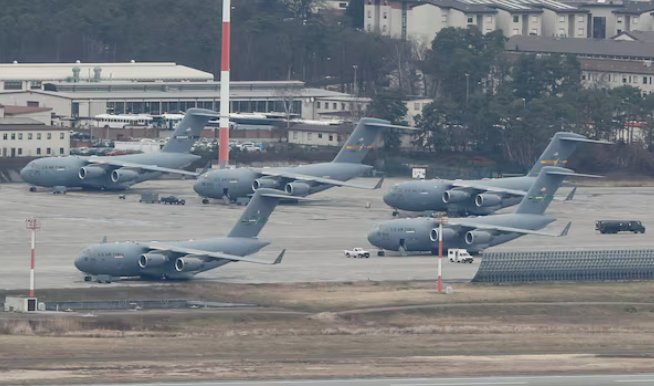
The statement comes after US officials confirmed that around 5,000 troops will be withdrawn from Germany over the next 6-12 months
PARIS
NATO has said it is working closely with the United States to understand the details of Washington’s decision to reduce its military troop presence in Germany, amid growing discussions on European security responsibilities.
NATO spokesperson Allison Hart said the alliance is in talks with the US to clarify the planned adjustment in force deployment. She added that the move highlights the need for Europe to increase its defence spending and take greater responsibility for shared security commitments.
The statement comes after US officials confirmed that around 5,000 troops will be withdrawn from Germany over the next six to twelve months. The decision marks a shift in American military posture in Europe.
According to reports, some 35,000 US military personnel are currently stationed in Germany, making it the largest American military presence in Europe. The planned reduction is expected to bring troop levels closer to pre-2022 numbers, before the Russia-Ukraine war led to a build-up of US forces under the previous administration.
US officials linked the decision to rising diplomatic tensions between Washington and European allies, particularly over differing views on the Iran conflict. A Pentagon official, speaking anonymously, said recent remarks from German leadership were considered “inappropriate and unhelpful,” adding that the move reflects US frustration with allied responses.
The Pentagon also confirmed that the withdrawal will be carried out gradually over several months and includes the removal of a brigade combat team and cancellation of planned deployments of additional military units.
The decision has raised concerns among European security analysts, who warn that it could signal a broader shift in US defence priorities and push European nations to increase military self-reliance.
NATO has stressed that while the US remains committed to the alliance, the situation underlines the importance of stronger European defence capabilities. The alliance also pointed to commitments made at the NATO Summit in The Hague, where members agreed to raise defence spending targets.
German officials have expressed surprise at the announcement, noting that recent cooperation with US forces had been constructive. Meanwhile, analysts suggest the move may further strain transatlantic relations and accelerate Europe’s push toward greater defence independence.