


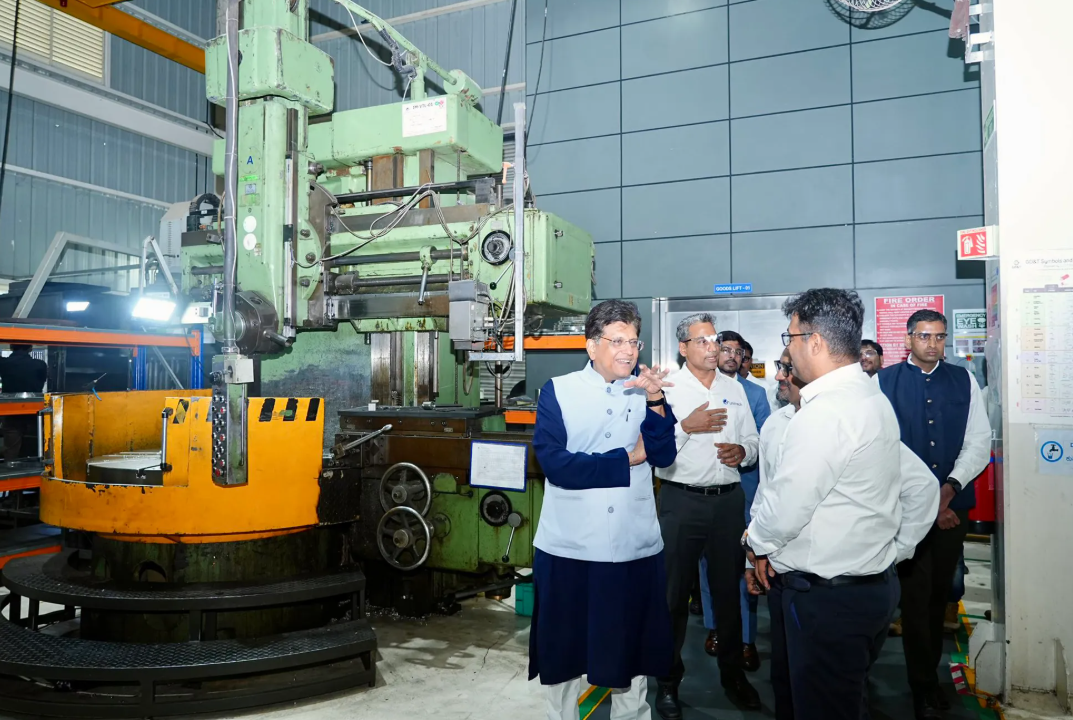
The government focuses on developing integrated manufacturing hubs designed to enhance efficiency, reduce costs, and support long-term industrial growth
New Delhi
India is accelerating its push to become a $30–35 trillion economy by 2047, with manufacturing identified as a key growth driver.
According to an official fact-sheet, the sector’s contribution to GDP is projected to rise to at least 25 percent from the current 16–17%, reflecting a strategic shift toward large-scale industrial expansion and infrastructure-led development.
As part of this transformation, the government is focusing on developing integrated manufacturing hubs designed to enhance efficiency, reduce costs, and support long-term industrial growth. These hubs combine physical infrastructure, regulatory support, and advanced connectivity, creating ecosystems that can sustain large-scale production and strengthen India’s role in global supply chains. The approach marks a transition from fragmented industrial development to a more coordinated and system-driven model.
This shift is closely linked to India’s evolving infrastructure strategy, which now emphasizes system-level planning instead of isolated project execution. By addressing bottlenecks and improving logistics efficiency, this model ensures smoother operations for industries and timely completion of projects. The government’s capital expenditure has seen a significant increase, rising from Rs 2 lakh crore in the financial year 2014–15 to Rs 12.2 lakh crore in 2026–27, highlighting a strong commitment to infrastructure development.
India’s growing appeal as a manufacturing destination is also evident in global investment trends. The country is currently ranked as the third most attractive location for manufacturing worldwide. At the same time, the nature of industrial output is changing, with medium- and high-technology sectors now contributing 46.3 percent of total manufacturing value added. This indicates a steady move toward more advanced and technology-driven production.
Micro, Small, and Medium Enterprises continue to play a crucial role in this ecosystem. With over 7.47 crore enterprises, MSMEs contribute 35.4 percent of manufacturing output and serve as the backbone of industrial activity across the country. Their labour-intensive nature makes them vital for job creation and inclusive economic growth.
The Union Budget for 2026–27 has introduced several initiatives to support this vision, including the establishment of three chemical parks, seven PM MITRA parks, MSME clusters, and a Rs 10,000-crore Biopharma SHAKTI program.