


Blurb: Former Chief Justice says parliamentary panel simultaneous polls uphold federalism and democratic governance framework.
New Delhi
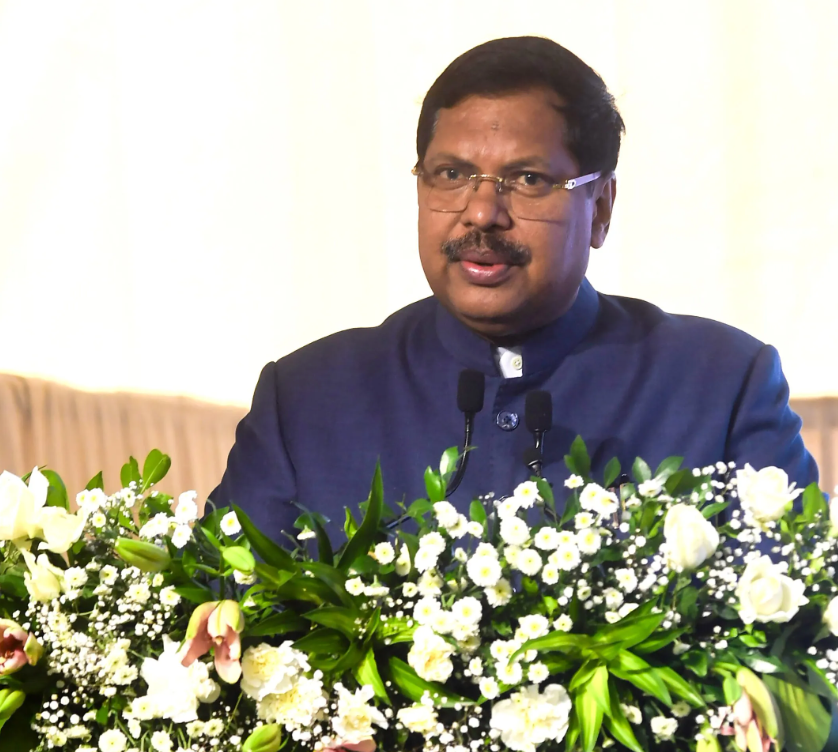
Former Chief Justice of India B. R. Gavai on Thursday told the Joint Parliamentary Committee (JPC) examining the One Nation, One Election (ONOE) proposal that the proposed Constitutional Amendment Bill does not violate the Basic Structure of the Constitution.
The JPC, headed by BJP MP P. P. Chaudhary, is currently reviewing the Constitution (129th Amendment) Bill, 2024, and the Union Territories Laws (Amendment) Bill, 2024.
Making a detailed representation before the panel, Justice Gavai argued that the Basic Structure doctrine primarily safeguards the federal framework and the democratic form of governance. He maintained that neither of these foundational principles would be altered under the proposed simultaneous elections framework.
Through the enactment of this Bill, neither federalism nor democracy will be changed or affected. Hence, the amendment is in consonance with the Basic Structure, he told the committee. He further clarified that the ONOE proposal only seeks to alter the timing of elections and does not impact the structure of elections or voter rights.
The ONOE only brings about a change in the manner of conducting elections at one point. The structure of elections and voter rights remains the same. Thus, the amendment would be constitutional, he added.
Addressing questions regarding Parliament’s legislative competence, the former CJI said the Constitution empowers Parliament to enact amendments necessary to synchronise elections to the Lok Sabha and state Assemblies. He emphasised that constitutional provisions permit such changes, provided they do not undermine core structural features.
On concerns about governmental accountability under a simultaneous election model, Justice Gavai asserted that mechanisms such as no-confidence motions would remain intact. Therefore, he argued, there would be no dilution of accountability of either Union or state governments.
Highlighting historical precedent, he pointed out that India successfully conducted simultaneous elections to the Lok Sabha and state Assemblies until 1967, indicating that the model is constitutionally viable. The two Bills were introduced in December 2024 by Union Law Minister Arjun Ram Meghwal and subsequently referred to the JPC.