


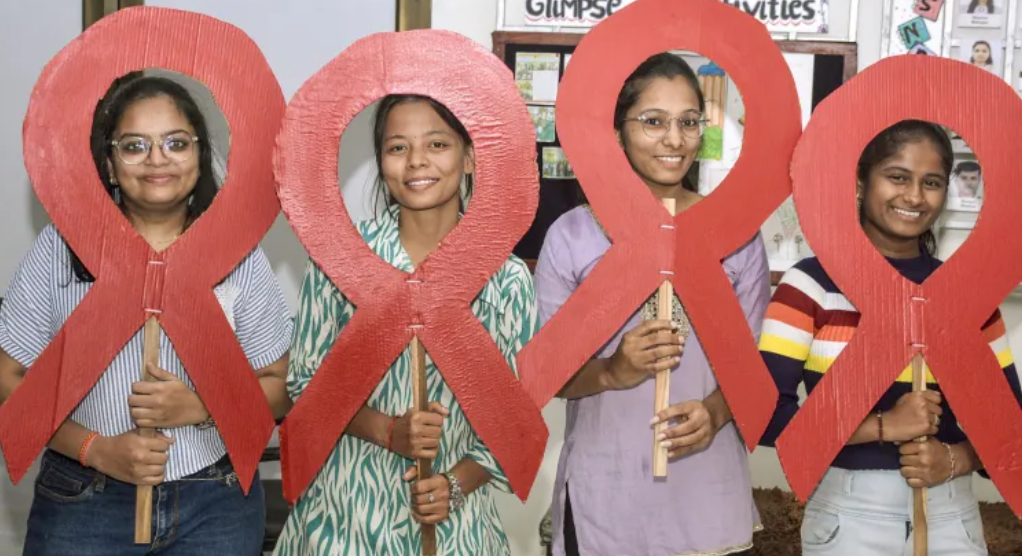
India recorded sharp reductions in HIV infections and AIDS-related deaths between 2010 and 2024, highlighting strong public health progress.
New Delhi
India has achieved significant progress in its fight against HIV/AIDS, reporting steep declines across key indicators between 2010 and 2024, the government said on Sunday ahead of World AIDS Day 2025. According to official data, the country recorded a 48.7 per cent decline in annual new HIV infections, an 81.4 per cent reduction in AIDS-related deaths and a 74.6 per cent fall in mother-to-child HIV transmission during the period.
The Ministry of Health stated that India continues to demonstrate strong outcomes under the current phase of the National AIDS Control Programme. The country’s HIV testing capacity has expanded considerably, rising from 4.13 crore tests in 2020–21 to 6.62 crore in 2024–25. Access to antiretroviral therapy (ART) has also increased, with the number of people living with HIV (PLHIV) on treatment growing from 14.94 lakh to 18.60 lakh. In the same timeframe, viral load testing nearly doubled from 8.90 lakh to 15.98 lakh.
Officials said these improvements surpass global averages and reflect India’s leadership in HIV response, backed by sustained domestic investment, data-driven interventions and strong community engagement. The programme’s focus on prevention, early detection, treatment expansion and stigma reduction has contributed to long-term positive outcomes.
Health Minister Jagat Prakash Nadda will lead the national-level World AIDS Day observance on Monday at Vigyan Bhawan in New Delhi. Senior government officials will also be present as the event reaffirms the country’s commitment to strengthening HIV prevention, treatment, care and efforts to eliminate discrimination against people living with HIV.
The ministry emphasised that continued progress will require deepened collaboration between government agencies, healthcare providers, civil society and affected communities to advance India’s goal of ending AIDS as a public health threat.