


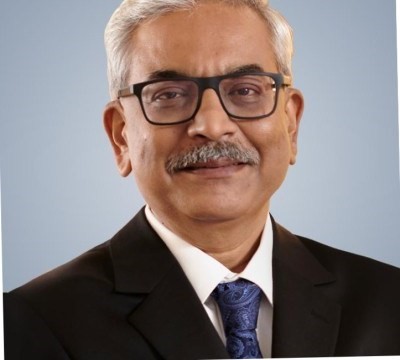
Blurb: The govt recognized the importance of transitioning towards alternative energy sources and has since been working closely with public sector oil companies.
New Delhi
India’s growing focus on ethanol blending and renewable energy development is playing a crucial role in reducing the country’s dependence on imported crude oil, former Bharat Petroleum Corporation Limited Chairman and Managing Director Krishnakumar Gopalan said on Monday.
Speaking about India’s evolving fuel and energy strategy, Gopalan noted that nearly 85% of the country’s crude oil requirement is currently met through imports. This heavy dependence on foreign oil supplies makes the Indian economy highly sensitive to international geopolitical developments and sudden changes in global crude prices.
According to Gopalan, the government recognized the importance of transitioning towards alternative energy sources at an early stage and has since been working closely with public sector oil companies to reduce risks associated with high import dependence.
One of the key initiatives in this direction has been the introduction of ethanol blending in petrol. India has already implemented a 20 percent ethanol blending target, which is aimed at lowering crude oil consumption while also supporting domestic agricultural and biofuel industries. Gopalan said efforts are underway to further accelerate the blending programme in the coming years.
He explained that ethanol blending represents a significant step toward reducing India’s reliance on imported crude oil. In addition, the country has been rapidly expanding investments in renewable energy sectors including solar power, wind energy, and green hydrogen technologies.
Gopalan also pointed to emerging plans for hydrogen retail outlets as part of India’s broader clean energy transition. The development of hydrogen infrastructure is being viewed as an important future component of sustainable transportation and industrial energy use.
Despite global uncertainty and fluctuations in energy markets, Gopalan praised Indian oil marketing companies for successfully maintaining stable fuel supplies across the country. He said instances of fuel shortages have remained extremely limited and were mostly confined to localized disruptions.
According to him, oil companies have managed supply chains efficiently even during periods of international volatility, ensuring uninterrupted fuel availability for consumers and industries.
Addressing the issue of fuel pricing, Gopalan revealed that oil marketing companies have absorbed a substantial share of rising global crude oil costs instead of passing the entire burden on to consumers. He estimated that current under-recovery on petrol stands at approximately Rs 13 to Rs 14 per litre, while diesel under-recovery is around Rs 38 per litre.
He added that recent easing in crude oil prices offers positive signs for the economy. Gopalan said ongoing international negotiations and improving market conditions could help stabilize fuel prices further and reduce pressure on oil companies as well as consumers.