


Bhopal
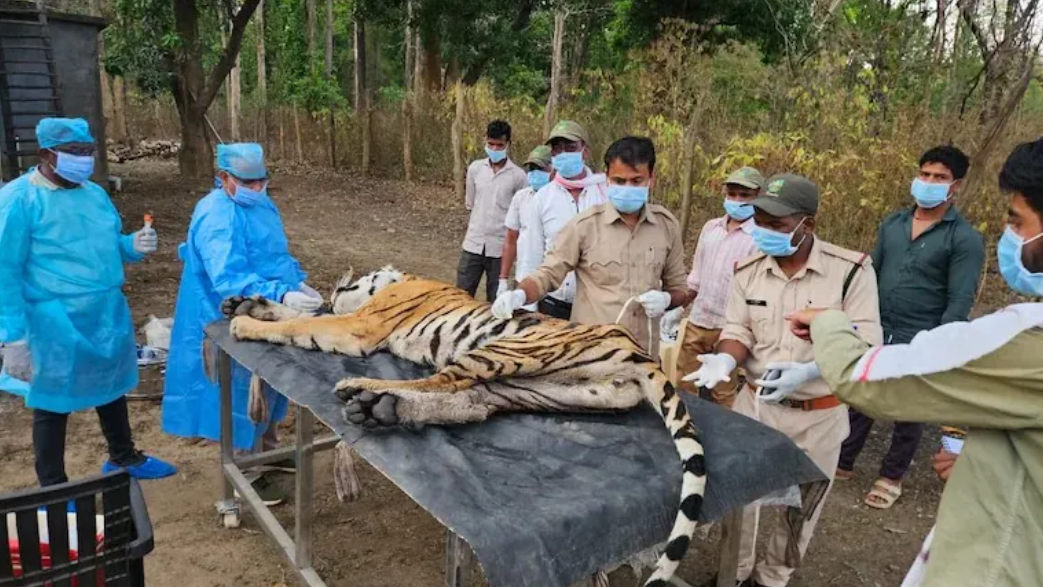
The heart of India’s wildlife conservation framework has been shaken by the devastating deaths of Tigress T141 and her entire litter of four cubs at the Kanha Tiger Reserve in Madhya Pradesh in a span of just nine days. Preliminary investigations have pointed towards the Canine Distemper Virus (CDV) as the likely cause of the deaths and veterinarians and wildlife forensic experts are working to confirm the source of the deadly outbreak.
The deaths of Tigress T141 and her four cubs has raised alarms regarding a potential biological crisis in what is traditionally considered one of the nation’s most secure tiger habitats.
According to reports and sources the tragic events began unfolding on April 21 when the first cub was found dead in the Amahi Nala area, followed shortly by the discovery of a second cub in a decomposed state on April 24.
By April 26, a third cub had succumbed to the mysterious illness, prompting an emergency rescue operation for the mother and her final surviving offspring.
On April 27, the critically-ill Tigress T141 and her last cub were moved to the Mukki Quarantine Centre for intensive care.
While a brief glimmer of hope appeared on April 28 when both animals showed signs of improvement and began to consume food, the situation took a tragic turn on Tuesday night.
Their condition deteriorated rapidly, leading to the death of the tigress on Wednesday morning and the eventual loss of her last cub too.
Preliminary investigations have pointed towards the dreaded Canine Distemper Virus as the likely cause for the entire family being wiped out.
The Canine Distemper Virus is a pathogen regarded by experts as one of the most dangerous viral threats to tiger populations due to its highly contagious nature and high mortality rate.
An exhaustive investigation is currently underway and veterinarians and wildlife forensic experts are working to confirm the source of the outbreak.
The carcass of the third cub has been transported to the School of Wildlife Forensic and Health in Jabalpur, while blood and tissue samples from the tigress and the last surviving cub are being analysed at specialised laboratories.