


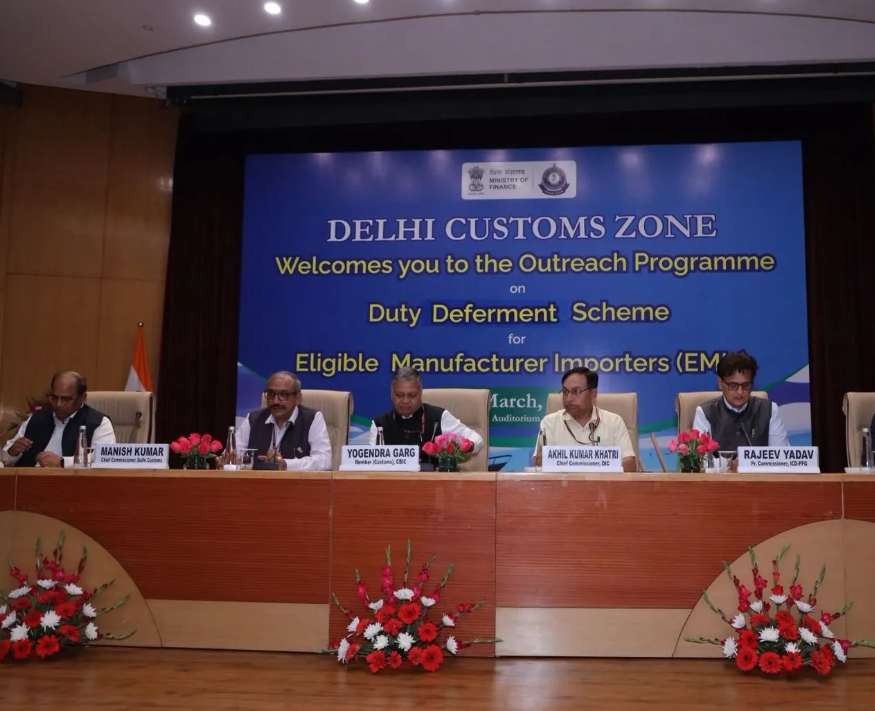
Intro: The Central Board of Indirect Taxes and Customs has conducted a hybrid outreach programme to raise awareness about its Duty Deferment Scheme, aimed at facilitating faster cargo clearance and improving liquidity for eligible manufacturer importers.
New Delhi
According to an official statement issued by the Ministry of Finance on Saturday, the Duty Deferment Scheme enables eligible manufacturers who import goods to clear consignments without making upfront duty payments. Instead, duties can be paid on a monthly basis, significantly easing financial pressure on businesses.
The outreach programme brought together customs officials, representatives from various trade bodies, industry stakeholders, and other key participants. The session featured a detailed presentation explaining the scheme’s framework, followed by an interactive segment where participants were able to raise queries and gain clarity on its implementation and benefits.
The scheme will be available to approved applicants across all customs formations from April 1, 2026, to March 31, 2028. It is open to Micro, Small and Medium Enterprises as well as manufacturer importers holding a valid Import Export Code. To qualify, applicants must have filed at least 25 EXIM documents in the previous financial year, with a reduced requirement of 10 documents for MSMEs. Additionally, businesses must demonstrate compliance with Goods and Services Tax regulations, maintain financial solvency, and possess a clean compliance track record.
Applications for the scheme can be submitted online through the AEO portal, which has been operational since March 1, 2026. The application process is entirely digital, eliminating the need for any physical interaction and thereby enhancing ease of doing business.
Yogendra Garg, Member (Customs) at CBIC, highlighted that the scheme is built on a trust-based approach designed to reduce clearance times and improve efficiency. He noted that the initiative aims to bridge trust gaps between authorities and businesses while fostering a collaborative compliance environment.
Aligned with the Make in India programme, the scheme is expected to strengthen domestic manufacturing by improving liquidity, enabling better inventory planning, and enhancing global competitiveness. It also promises reduced dwell time, improved supply chain efficiency, and stronger payment discipline, making it a significant step toward modernizing India’s trade ecosystem.