

India on Friday rejected US claims linking stalled trade talks to Modi–Trump calls, while monitoring a proposed American bill on Russian oil tariffs
Quote
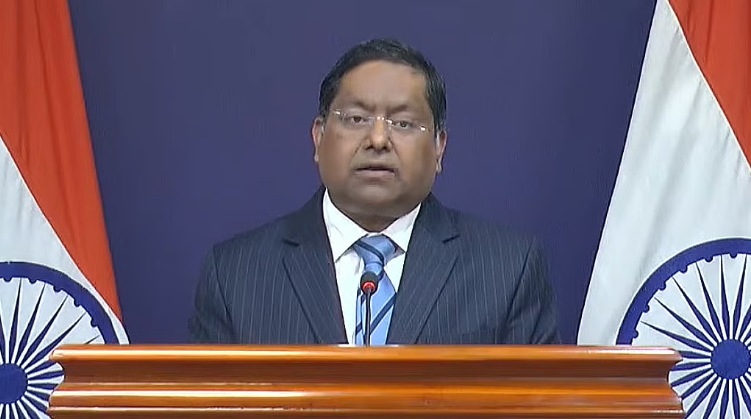
“PM Modi and President Trump have spoken on phone on eight occasions in 2025.” Randhir Jaiswal, MEA spokesperson
New Delhi
The Ministry of External Affairs (MEA) on Friday dismissed claims by US Commerce Secretary Howard Lutnick that a proposed India–US trade deal failed because Prime Minister Narendra Modi did not call US President Donald Trump. MEA spokesperson Randhir Jaiswal said the “characterisation of discussions in reported remarks is not accurate,” stressing that Modi and Trump had spoken by phone eight times in 2025.
Responding to Lutnick’s comments, Jaiswal said India and the United States had been close to concluding a trade agreement on several occasions and that New Delhi continues to remain interested in a mutually beneficial deal. Lutnick had earlier suggested that India missed a narrow window to finalise the pact, claiming a direct leader-level call was required and did not take place.
The MEA also said it is closely monitoring developments related to a proposed US bipartisan bill that seeks to impose up to 500% tariffs and secondary sanctions on countries importing Russian energy. The legislation, titled the Sanctioning Russia Act of 2025, has been backed by Republican Senator Lindsey Graham and Democratic Senator Richard Blumenthal, and reportedly has the support of President Trump. India is currently the world’s second-largest buyer of Russian crude after China.
On the issue of energy imports, Jaiswal said India’s procurement decisions are guided by global market conditions and the need to ensure affordable energy for its 1.4 billion people. He emphasised that energy security remains a key national priority.
The proposed sanctions, if enforced, could further strain India–US relations, which have seen both cooperation and friction in 2025 amid trade disputes, geopolitical pressures and differing policy priorities, even as engagement continues across strategic and economic sectors.