

Intro: India’s massive, digitally connected Gen Z will increasingly shape the nation’s social and political future.
New Delhi
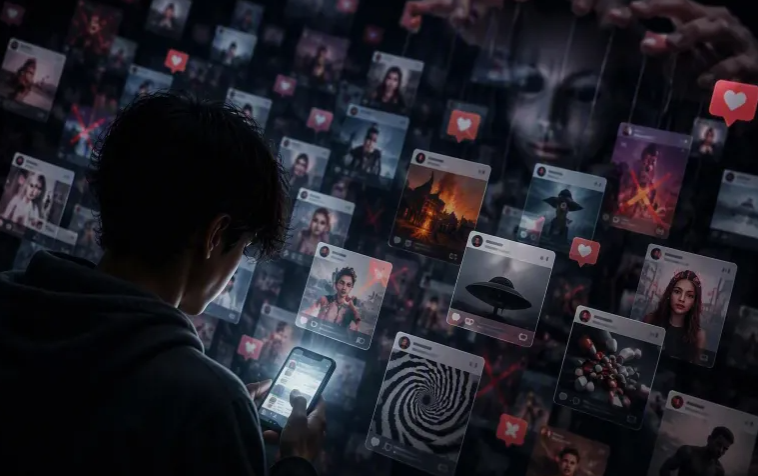
Algorithm-driven social media platforms may be increasing the exposure of India’s Generation Z to misinformation, emotionally charged content and online propaganda, raising concerns about their influence on public opinion and political behavior.
India has an estimated 407 million people aged between 14 and 29, representing nearly 28 per cent of the country’s population, according to UN World Population Prospects data. As one of the country’s largest and most digitally connected demographic groups, Gen Z is expected to play an increasingly important role in shaping India’s social and political future.
The article cited an IIM Rohtak study involving nearly 39,000 respondents aged between 18 and 25, which found that young people recorded an average daily screen time of around seven hours, with a significant share spent on social media platforms.
It argued that algorithm-driven feeds are not neutral reflections of reality. Instead, they are designed primarily to maximise user engagement and keep people scrolling for longer periods. As a result, content that generates anger, fear, outrage or strong emotional reactions may receive greater visibility than balanced or verified information.
The report referred to controversies involving major technology platforms, including allegations regarding content moderation decisions in the United States and criticism of social media algorithms for amplifying hate speech in Myanmar. It noted that UN investigators and human rights organisations had raised concerns about the role of online platforms in the spread of anti-Rohingya hate.
The article also highlighted the growing role of social media in youth-led movements across South Asia. It cited recent protests in Nepal and Bangladesh, where digital platforms were used to organise, communicate and mobilise large groups.
In India, the article pointed to online activity surrounding the NEET paper-leak protests, where short videos, AI-generated content and influencer networks helped amplify student concerns. It warned that deepfakes and coordinated misinformation campaigns could influence not only young users but also the wider public.
The article called for stronger digital governance, media literacy and accountability measures without imposing blanket bans on major social media platforms.
Flawed social media Algorithms
Algorithm-driven feeds prioritize engagement by promoting emotive content like outrage over balanced information. While major platforms face scrutiny for amplifying hate speech and fueling controversies, digital tools simultaneously empower youth-led mobilization and protests across South Asia.