


Blurb:
The Court ruled that Bengaluru’s historic Century Club is a public authority under the RTI Act, as its 1913 land grant constitutes substantial state financing.
BENGALURU
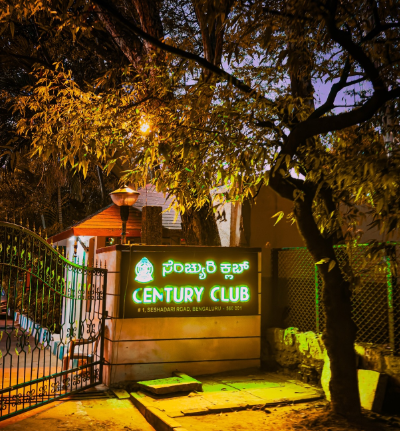
In a landmark judgment delivered recently, a two-judge division bench of the Karnataka High Court ruled that Bengaluru’s historic Century Club constitutes a “public authority” and must officially operate under the purview of the Right to Information (RTI) Act.
The division bench, comprising Justice Anu Sivaraman and Justice Venkatesh Nayak T., dismissed an appeal filed by the club’s management.
The high-profile appeal attempted to challenge a previous single-judge order passed by Justice Suraj Govindaraj, which had similarly aligned with the Karnataka Information Commission’s stance to open the club’s investments, internal records, and executive operations to regular public inspection.
The legal battle dates back to 2012 when social activist and High Court advocate S. Umapathy filed an RTI application requesting the club’s cataloged rules and financial archives.
The Century Club rejected the request, firmly asserting that it was an independent, private members’ association funded strictly via internal subscription fees and day-to-day member contributions. Management argued that the 7.5 acres of premium land it occupies inside Cubbon Park was handed over in 1913 by the Maharaja of Mysore, Narasimharaja Wodeyar, alongside Sir M Visvesvaraya, as a personal pre-independence donation rather than a piece of government property.
However, the High Court thoroughly rejected the club’s defense. The division bench emphasized that any land granted by an erstwhile ruler or king during the pre-independence era was executed on behalf of the princely state’s government, meaning the land remains public property.
The court further noted that the current market valuation of the massive 7.5-acre property in the dead center of Bengaluru runs into hundreds, if not thousands, of crores of rupees. Because the club pays no active rent and its entire survival relies on this public property, the free land grant constitutes an immense “indirect state subsidy.”
The bench concluded that since member fees pale into insignificance when compared to the value of the land, the organization is substantially financed by the state, making transparency via the RTI Act legally mandatory.