

New IFAB regulation targets disguised verbal abuse ahead of 2026 World Cup kickoff
Vancouver
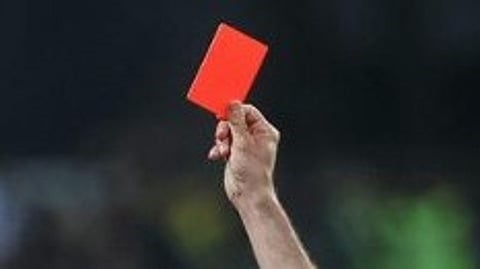
The International Football Association Board International Football Association Board has approved a new rule that allows referees to issue red cards to players who cover their mouths while verbally confronting opponents, a move aimed at improving transparency and curbing disguised abuse on the field.
The decision, unanimously passed at a meeting in Vancouver, will come into effect at the upcoming FIFA World Cup 2026, scheduled to begin on June 11 across the United States, Canada and Mexico.
The regulation was proposed following an incident involving Vinícius Júnior, who accused Gianluca Prestianni of making a racially charged remark while covering his mouth during a UEFA Champions League match in February.
Under the new guideline, referees will have the authority to interpret such actions as potential attempts to conceal abusive language. IFAB stated that any player covering their mouth in a confrontational situation may be sanctioned with a red card at the discretion of the competition organiser.
“At the discretion of the competition organiser, any player covering their mouth in a confrontational situation with an opponent may be sanctioned with a red card,” IFAB announced.
The rule is part of a broader effort to enhance on-field discipline and address rising concerns over verbal misconduct and hidden communication during matches.
In a related disciplinary case, UEFA recently handed Prestianni a six-match suspension for verbal abuse described as homophobic in nature. If selected for Argentina’s World Cup squad, the player could miss the opening matches of the tournament, although an appeal remains possible.
IFAB also approved an additional rule allowing red-card sanctions for players who leave the pitch in protest of refereeing decisions, as well as for team officials who encourage such actions.
The governing body confirmed that all participating nations will be briefed on the updated disciplinary framework ahead of the expanded 48-team World Cup, marking one of the most significant rule updates in recent international football history.