


Intro
State plans major elevated corridors to tackle Bengaluru’s growing traffic crisis
BENGALURU
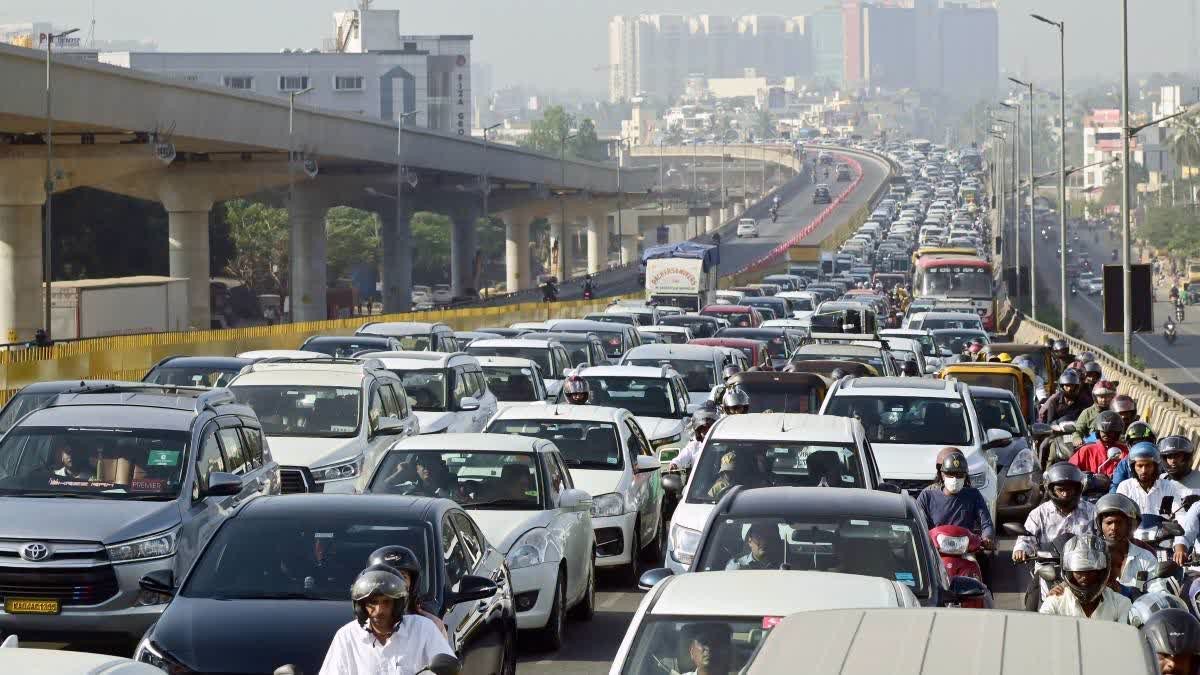
In a major push to address Bengaluru’s worsening traffic congestion, the Karnataka government has drawn up an ambitious plan to construct 11 elevated corridors across key bottlenecks in the city. The project aims to provide a long-term and sustainable solution to traffic woes in India’s tech capital.
The proposed corridors, spanning a total length of 75.60 km, are estimated to cost ₹13,262 crore. Of this, ₹7,150 crore will be funded directly by the government, while the remaining amount will be executed under the hybrid annuity model. Additionally, ₹2,072 crore has been earmarked for land acquisition.
The project will be implemented by Bangalore Smart Infrastructure Limited and will cover five municipal corporation limits within the city. The corridors are strategically planned to decongest some of the busiest and most traffic-prone stretches.
Key proposals include a slit flyover at MEI Junction on Tumkur Road, a grade separator linking Pipeline Road to Outer Ring Road via Mahalaxmi Layout, and a major elevated corridor connecting Minerva Circle, Hudson Circle, KR Circle and Town Hall. Other crucial routes include Kanakapura Road near Raghuvanahalli Cross and an elevated stretch from Doddaballapura Road Police Station Junction to Kogilu Circle.
Additional corridors are planned at Konanakunte Cross and from Yeshwantpur-Mattikere to Old Madras Road via IISc and Mekhri Circle. A major east-west link will connect Old Madras Road to Electronic City via Indiranagar, Old Airport Road, Hosur Road and Silk Board Junction—one of the city’s most congested zones.
Further, elevated corridors from Sirsi Circle to Nayandahalli and Talaghattapura to Kanakapura Main Road are expected to ease traffic flow in south and west Bengaluru.
Officials believe the project will significantly reduce travel time, improve connectivity and boost productivity. However, challenges such as land acquisition, environmental concerns and execution timelines remain critical factors in determining its success.