


Intro:
Proposal to reduce SRG license fee sparks debate over media independence and political bias.
Zurich
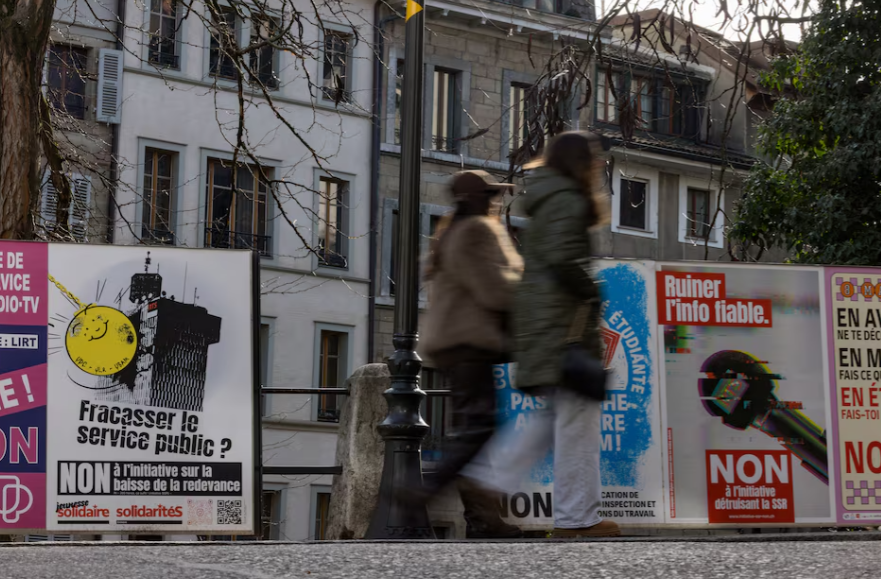
Voters in Switzerland will head to the polls next month to decide whether to significantly reduce funding for the country’s public broadcaster, SRG SSR. Supporters argue the move will ease financial pressure on households, while critics warn it reflects a broader trend of political attacks on public media institutions across Europe.
The proposal seeks to lower the mandatory annual broadcasting fee from 335 Swiss francs to 200 francs. Currently, residents are required to pay the levy to fund SRG’s television, radio, and digital services. Backers of the measure, including members of the right-wing Swiss People’s Party (SVP), say the reduction would provide modest but meaningful savings for families and better reflect changing media consumption habits.
Advocates of the cut argue that younger generations increasingly rely on social media platforms and streaming services rather than traditional television or radio broadcasts. They contend that forcing citizens to pay a high fee for services they rarely use is outdated in the digital era. Thomas Matter, an SVP lawmaker, claimed that SRG’s journalistic work has a political bias, a bias to the left, echoing criticisms frequently directed at public broadcasters by conservative groups elsewhere in Europe.
Opponents, however, view the referendum as part of a wider pattern of pressure on publicly funded media from right-leaning political movements. They argue that national broadcasters serve as independent institutions capable of holding governments and powerful interests accountable. Reducing funding, they warn, could weaken journalistic capacity and undermine media pluralism in a country known for its strong democratic traditions.
SRG has firmly rejected accusations of bias, stating that it adheres to strict editorial standards designed to ensure balanced reporting. The broadcaster has also pointed to research from the University of Zurich, which concluded that its news coverage does not systematically lean left or right.
The outcome of the vote could have implications beyond Switzerland, as public broadcasters across Europe grapple with shrinking audiences, rising competition, and intensifying political scrutiny.