


CH NEWS, BENGALURU
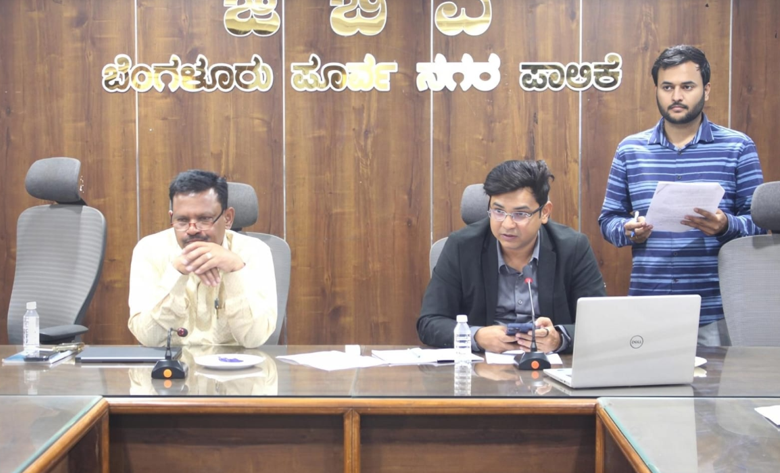
The Bengaluru East City Corporation has instituted a strict regulatory framework governing urban infrastructure excavation, making prior civic permission mandatory for all road-cutting activities. The decisive policy shift was announced following a high-level inter-departmental coordination meeting chaired by Additional Commissioner (Development) Lokhande Snehal Sudhakar. The directive aims to eliminate the chronic menace of haphazardly excavated thoroughfares, substandard restoration jobs, and the resultant public hardship that plagues commuter movement across eastern residential and commercial corridors.
The administrative conclave brought together key stakeholders from major civic utilities, including BESCOM, BWSSB, GAIL, KPTCL, various optical fibre cable (OFC) network agencies, and the Traffic Police. Discussions centered on establishing rigid accountability measures, eliminating inter-agency friction, and mandating synchronized project execution to prevent multiple departments from repeatedly tearing up the same stretches of newly paved asphalt.
Additional Commissioner Sudhakar emphasized that all participating entities must function as a unified administrative team. Officials were explicitly barred from offering administrative excuses or bureaucratic delays for lagging infrastructure projects. A core mandate requires every utility department to submit comprehensive advance action plans for the current financial year directly to the Corporation. Under the new protocol, physical excavation can only commence after securing formal administrative clearance and drafting synchronized joint utility corridors for electricity cables, water mains, underground drainage networks, piped natural gas lines, and telecommunication ducts.
To safeguard public welfare during active construction phases, the Corporation laid down explicit operational protocols. Agencies must restore cut surfaces immediately to stringent engineering standards without compromising quality or exceeding strict project deadlines. Mandatory safety protocols require robust physical barricading, prominent warning signage, and high-visibility night lighting at all active worksites. Furthermore, contractors must establish safe alternative traffic diversion routes, exercising extreme caution near sensitive high-traffic zones such as major arterial junctions, Namma Metro stations, and healthcare facilities. Debris, discarded utility poles, redundant piping, and stray cable boxes must be cleared from roads and footpaths immediately upon project completion.
Specific local interventions were also ordered during the review. The BWSSB was instructed to finish the approximately 700-metre pipeline installation along the Yamalur–Kempapura route within its scheduled window, while formal clearance was issued for pipeline deployment from Seegehalli Main Road to Basavanapura Main Road, with restoration costs explicitly assigned to the water board. Simultaneously, authorities cracked down on illicit utility trenching near the Udupi Sannidhi Hotel on the Outer Ring Road, ordering immediate reinstatement of the damaged surface. In a parallel safety push, the Corporation and KPTCL announced coordinated enforcement against illegal structures violating the mandated 2.8-metre safety buffer from high-tension power transmission line corridors, noting that statutory notices have already been served to errant property owners.