


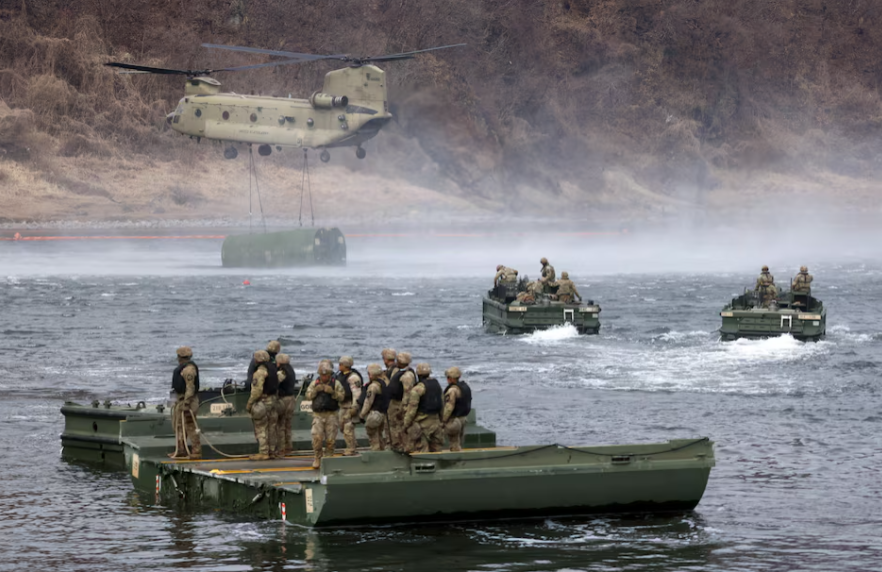
Yeoncheon
South Korea’s Joint Chiefs of Staff said the missiles were launched from an area near the North Korean capital, Pyongyang, at around 1:20 p.m. local time (0430 GMT). The projectiles were fired toward the sea off the country’s east coast, a direction commonly used by North Korea during weapons tests.
Japan’s coast guard also reported detecting what it believed to be a ballistic missile that landed in the sea. According to Japan’s public broadcaster NHK, citing military sources, the projectile appeared to have fallen outside Japan’s exclusive economic zone, indicating no immediate threat to Japanese territory.
The launches took place as U.S. and South Korean forces continued their annual large-scale military exercises in South Korea. Washington and Seoul describe the drills as defensive in nature and intended to strengthen their readiness against potential threats from North Korea. However, Pyongyang has historically criticized such exercises, viewing them as preparations for invasion and often responding with missile tests.
North Korea has conducted a wide range of missile tests over the past two decades as part of its effort to develop advanced weapons capable of delivering nuclear warheads. Analysts believe the country has successfully developed nuclear weapons and continues to improve its missile delivery systems.
Due to its nuclear and missile programs, North Korea has been subject to multiple sanctions imposed by the United Nations Security Council since 2006. These sanctions were designed to restrict the country’s access to materials, technology and financial resources that could support its weapons development.
Despite the economic pressure created by these restrictions, Pyongyang has remained defiant and continued to pursue its military capabilities. Saturday’s missile launches underscore the persistent security challenges in the region, even as diplomatic efforts and calls for dialogue occasionally emerge from both sides.