


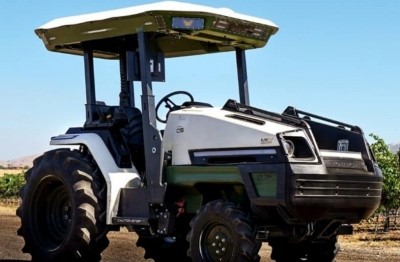
Electric Agriculture Revolution
New Delhi
The Union Government has released a new Indian Standard for electric agricultural tractors to ensure safety, reliability, and performance across the country. The ‘Electric Agricultural Tractors — Test Code’ (IS 19262:2025) was unveiled by Union Consumer Affairs Minister Pralhad Joshi on Sunday and has been developed by the Bureau of Indian Standards (BIS).
The standard provides uniform testing protocols for electric tractors, covering areas such as PTO power, drawbar power, belt and pulley performance, vibration measurement, and component inspections. It draws on existing tractor test codes and automotive standards, adapted for electric applications. Implementation through authorised testing institutes is expected to boost adoption of electric tractors, encourage innovation in clean agricultural technology, and reduce emissions.
Electric tractors use battery-powered motors instead of diesel engines, offering lower emissions, reduced noise, and decreased maintenance. They provide a healthier working environment for farmers and help cut operating costs. With advancements in battery and motor technologies, these tractors are increasingly capable of replacing conventional diesel-powered machines.
Before this standard, the absence of harmonised testing procedures made it difficult to assess electric tractors consistently. IS 19262:2025 addresses this by providing a structured approach for performance and safety evaluation, supporting manufacturers in delivering reliable machines and giving farmers confidence in their capabilities.
The development of the standard involved contributions from manufacturers, research institutes, certification agencies, and government bodies, including the ICAR-Central Institute of Agricultural Engineering, Central Farm Machinery Training and Testing Institute, and the Tractor and Mechanisation Association.
While the standard is voluntary, it marks a major step in formalising India’s approach to emerging electric mobility in agriculture, aligning domestic practices with international trends and supporting sustainable farm mechanisation for the future.