


Washington
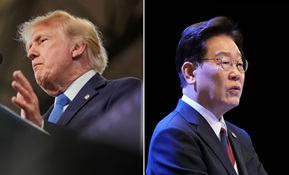
US President Donald Trump has instructed the Pentagon to significantly reduce joint military exercises with South Korea, reviving his earlier objections to the drills over their cost and what he considers their provocative nature.
The move comes as the annual Ulchi Freedom Shield exercises began on Monday.
Trump has also cited South Korea’s reluctance to support US actions against Iran and pointed to his relationship with North Korean leader Kim Jong Un. The decision echoes Trump’s approach during his first presidency, when he suspended major US-South Korean exercises following his 2018 summit with Kim.
The exercises are scheduled to run from August 17 to 27 and involve around 18,000 South Korean troops. Military officials had said the drills would incorporate training designed to counter emerging threats, including drone attacks, GPS disruption and cyber warfare. The changes reflect lessons from recent conflicts, particularly the war in Ukraine and the evolving capabilities of North Korea.
The drills remain an important part of maintaining the readiness of US and South Korean forces on the Korean Peninsula. South Korean officials have indicated that the exercises will continue despite Washington’s decision to scale back their scope.
North Korea has repeatedly condemned the annual exercises, describing them as preparations for war. Pyongyang has warned that increased military cooperation between the United States and South Korea could prompt stronger measures to reinforce its nuclear deterrent.
Trump’s latest decision has therefore raised questions over military readiness and deterrence at a time when North Korea has continued developing its nuclear and missile capabilities. Analysts have also expressed concern that reducing the exercises could affect the credibility of the US-South Korea security alliance.
For Washington, the move appears aimed partly at creating space for renewed diplomacy with Pyongyang. Trump has repeatedly highlighted his personal rapport with Kim, while North Korea has so far shown little willingness to return to negotiations without major concessions. South Korea, meanwhile, faces the challenge of maintaining close military coordination with its US ally while responding to the changing security environment created by North Korea’s expanding military capabilities