


Intro: Iran launched coordinated missile and drone attacks on American military facilities, intensifying regional tensions despite fragile ceasefire negotiations.
Dubai
The Middle East witnessed a sharp escalation in hostilities early on Sunday after Iran launched a coordinated barrage of missiles and drones targeting United States military installations in Kuwait and Bahrain. The attacks came shortly after U.S. President Donald Trump issued a stern warning to Tehran, threatening to eliminate the Iranian leadership if it failed to uphold the interim peace agreement intended to end the ongoing conflict.
According to Iranian military officials, the Islamic Revolutionary Guard Corps carried out the operation through its naval and air divisions, targeting American military facilities across the Gulf region.
Tehran claimed the strikes were a direct response to recent U.S. military actions, which it described as violations of the ceasefire agreement reached earlier this month. Iranian authorities further warned that continued American military operations would completely halt all diplomatic efforts and lead to more severe retaliation.
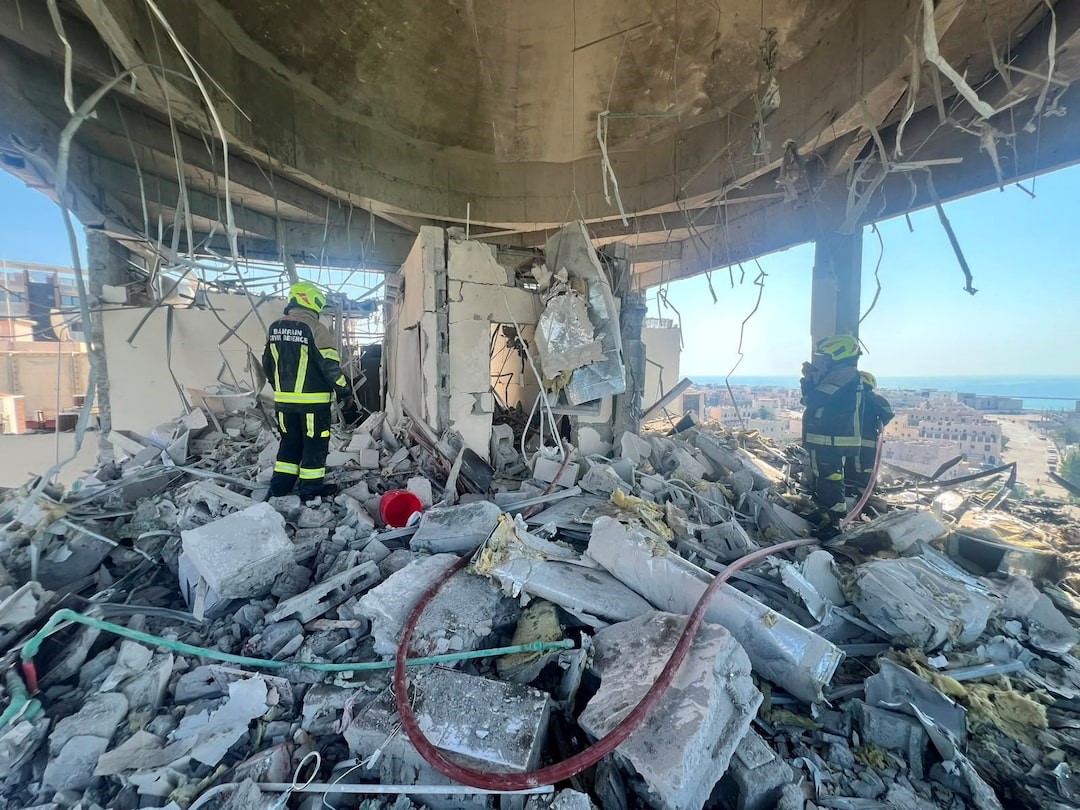
Shortly after President Trump’s warning on social media, Kuwait confirmed that its air defense systems had intercepted incoming missiles and drones. Bahrain also activated emergency sirens as projectiles approached its territory. Later in the day, Bahraini authorities reported that one Iranian strike damaged a residential building in Muharraq province. Fortunately, no casualties were reported, although the incident heightened concerns over civilian safety. Bahrain has since called upon the United Nations Security Council to convene an emergency meeting and hold Iran accountable for the attacks.
A senior U.S. official confirmed that American military facilities in Kuwait and Bahrain had been targeted but stated that there were no reported casualties among U.S. personnel and no significant damage to military infrastructure. The official added that military and intelligence agencies continue to assess the evolving security situation.
The latest attacks followed renewed U.S. military strikes on Iranian positions only hours after a commercial tanker was struck in the strategically important Strait of Hormuz, one of the world’s busiest energy shipping routes. The waterway has remained largely disrupted throughout the conflict, raising fresh concerns about global energy supplies and international trade.
President Trump reiterated his administration’s hardline stance, stating that while the United States had exercised restraint, it would not hesitate to take decisive military action if Iran continued to violate the peace agreement. He warned that Iran’s leadership risked catastrophic consequences if hostilities persisted.