


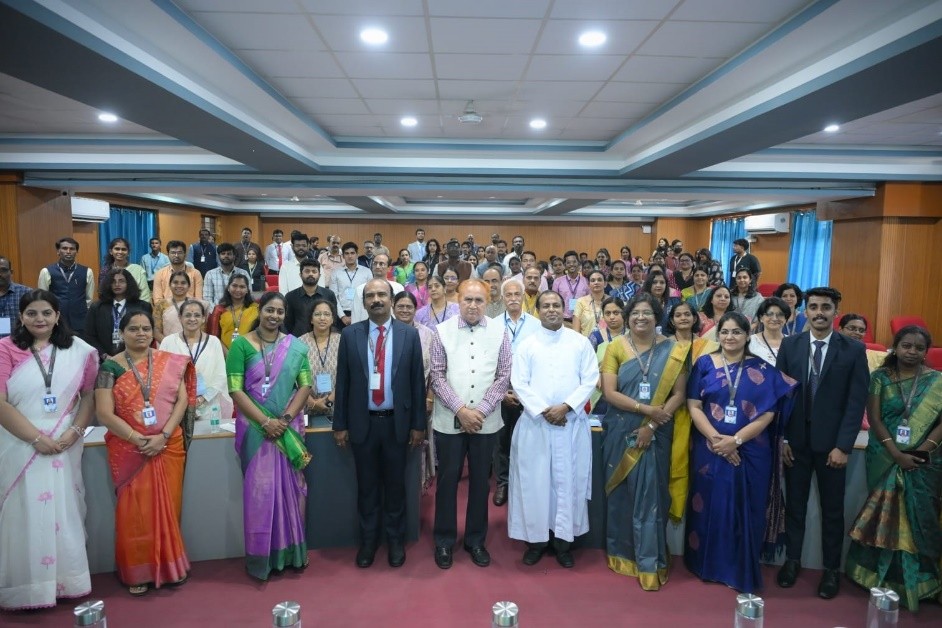
Bengaluru: Kristu Jayanti (Deemed to be) University organised a two-day 18th edition of its ‘ICon National Conference’, bringing together academicians, industry experts, and scholars from across India to discuss emerging approaches to quality assurance in higher education on Friday and Saturday.
The conference titled ‘Reimagining Quality Assurance in Higher Education: Technology, Inclusion and Outcome-Based Innovation’ was hosted by the university’s Internal Quality Assurance Cell (IQAC).
The event marked a significant milestone as the first ICon conference held after the institution attained university status.
It served as a platform for dialogue on key issues shaping higher education, including curriculum design, institutional rankings, digital transformation, and inclusive learning frameworks.
In his presidential address, Vice Chancellor Fr. Dr Augustine George highlighted the importance of quality education in an increasingly AI-driven world.
He emphasised the need for innovation in teaching and learning processes, the adoption of outcome-based education, and curriculum frameworks that foster holistic student development. He also stressed the role of lifelong learning and research in building inclusive academic environments.
Former IGNOU Vice Chancellor Prof Nageshwar Rao addressed structural challenges in higher education and called for adaptable academic systems supported by inclusive quality benchmarks. He elaborated on the transformative aspects of the National Education Policy (NEP) 2020, including the Academic Bank of Credits, credit transfer mechanisms, SWAYAM courses, and the National Digital Library, with particular focus on digital learning models.
Prof. Dr GR Angadi, Dean of the Central University of Karnataka, spoke on strengthening outcome-based education through effective curriculum design and competency-based assessments aligned with measurable learning outcomes.
Dr Nalini Arumugam from SEGi University discussed strategies to enhance classroom engagement and redefine teaching practices in the digital era.
More than 150 delegates participated, with over 120 research papers presented during technical sessions.
The conference also featured keynote addresses by experts from academia and policy institutions, who shared insights on research advancements, digital education initiatives, and evolving policy frameworks in higher education.
The successful conduct of the conference underscores the university’s continued commitment to academic excellence, innovation, and quality enhancement in higher education.