


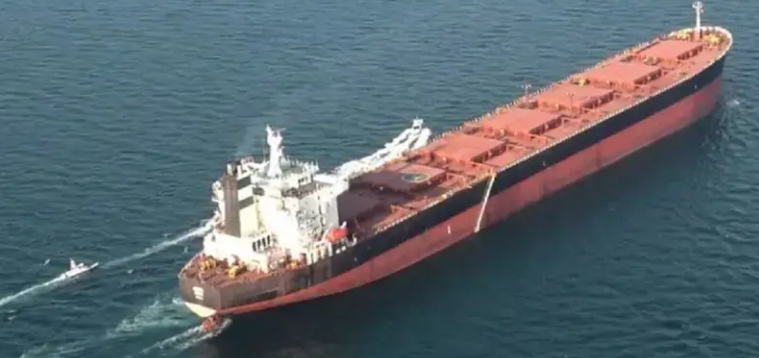
INTRO: Ships are currently required to do detailed paperwork, take special clearance codes, and travel through a single designated corridor under Iranian military escort.
TEHRAN, Iran
The global shipping industry is on high alert as Iran’s Revolutionary Guard begins enforcing strict new controls over the Strait of Hormuz.
This narrow waterway, essential for the world’s energy supply, is now under a tight transit system. Ships are currently required to submit detailed paperwork, receive special clearance codes, and travel through a single designated corridor under Iranian military escort.
Data shows that since mid-March, dozens of vessels have followed these new rules, while the traditional shipping lanes have sat empty. However, the situation remains diplomatically tense. India’s Ministry of Shipping recently dismissed rumors that any illegal tolls are being collected from passing ships. Indian officials emphasized that international law protects the freedom of navigation, insisting that no country can charge fees for passage through these international waters.
Despite the hurdles, Iranian Foreign Minister Abbas Araghchi clarified that “friendly nations,” such as India, China, and Russia, are being granted safe passage. Several ships bound for Indian ports have already crossed the strait safely after coordinating with Iranian authorities. Iran’s defense council stated that as long as a vessel is not involved in hostile acts against the country, it will be allowed to move.
He said that when Iran announced the partial blockade of Strait of Hormuz, many in the world did not believe it and thought it was a bluff. However, with time, Iran showed its strength and authority over the Strait of Hormuz.
“They thought Iran did not have the courage to do such a thing. But we did it with strength. They mobilised all their abilities to stop it, but they failed. They even turned to other countries. They even appealed to those they themselves consider enemies, asking them to come and help reopen this waterway. But no one responded, because it is simply not feasible,” Araghchi mentioned.