


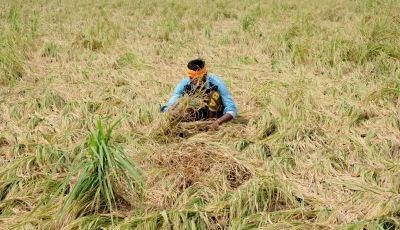
India has significantly expanded bioenergy capacity over a decade, driven by government incentives and targeted renewable energy programmes.
New Delhi
India has added substantial bioenergy capacity over the last ten years, reinforcing its push towards cleaner and more sustainable energy sources, Parliament was informed on Wednesday. The country has added 2,361 MW of biomass-based power capacity, 228 MWe of waste-to-energy capacity, and established around 2.88 lakh biogas plants during this period, propelled by a range of government-supported schemes and financial incentives.
In a written reply to a question in the Lok Sabha, Minister of State for New and Renewable Energy Shripad Yesso Naik said the Ministry of New and Renewable Energy (MNRE) has been actively supporting the installation of bioenergy projects across the country. These efforts are currently being implemented under the National Bioenergy Programme (NBP), Phase-I, which was notified on November 2, 2022, with a total budget outlay of ₹998 crore for the period from 2022–23 to 2025–26.
The minister noted that government support for bioenergy projects has been consistent over the past decade through multiple schemes. These include the National Biogas and Manure Management Programme (NBMMP) implemented during the 12th Five-Year Plan, and the New National Biogas and Organic Manure Programme (NNBOMP), which was operational from 2018–19 to 2020–21. These initiatives have played a key role in expanding decentralized energy access, improving waste management, and promoting the use of organic manure in agriculture.
In addition, several other schemes were launched to strengthen biomass-based power generation. These include programmes to promote grid-interactive biomass power and bagasse-based cogeneration in sugar mills during the 12th Plan period, as well as initiatives focused on energy generation from urban, industrial and agricultural waste and residues. The Scheme to Support Promotion of Biomass-based Cogeneration in Sugar Mills and other industries was also implemented between 2018–19 and 2020–21.