


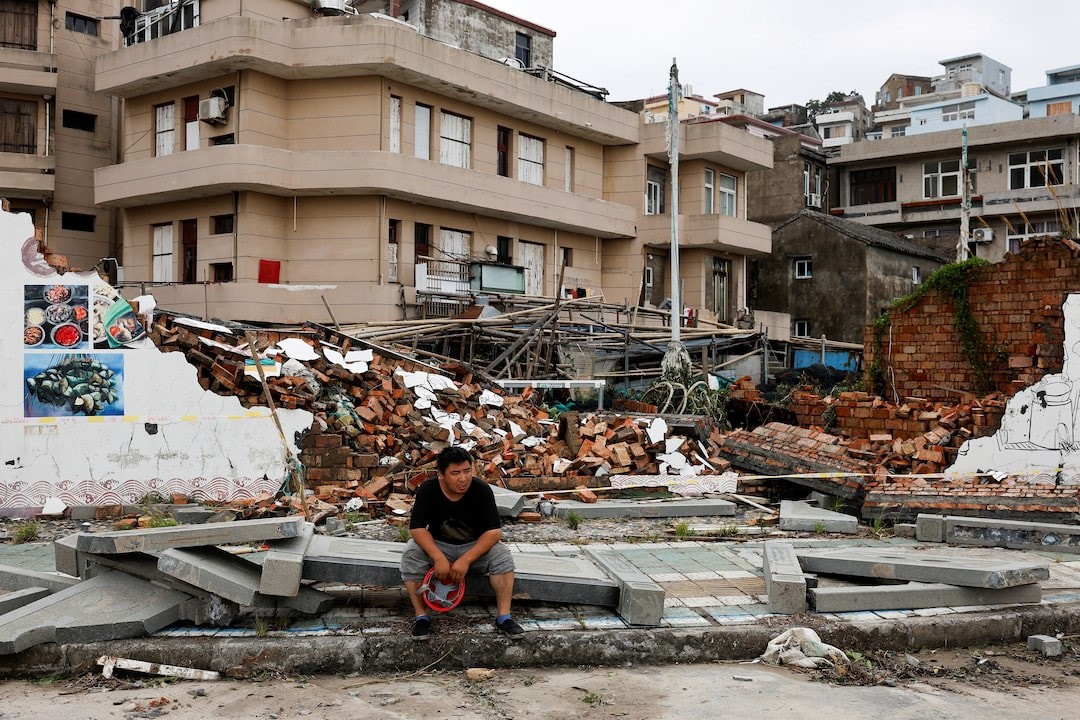
Intro: ‘Typhoon Bavi’ triggered mass evacuations, severe flooding, infrastructure damage, and widespread emergency operations across eastern China.
Wenzhou
Typhoon Bavi, the strongest storm to hit mainland China so far this year, battered the country’s eastern coastline with torrential rainfall and destructive winds before gradually weakening into a tropical storm on Sunday.
Despite losing some intensity after making landfall, meteorologists warned that the massive weather system could continue to bring prolonged and widespread rainfall across eastern and northern China over the coming days, raising concerns about flooding, landslides, and further disruptions.
Chinese authorities launched one of the country’s largest evacuation efforts in recent months, relocating more than 2.8 million people from vulnerable areas, according to figures compiled from state media reports.
Zhejiang Province accounted for over 2.2 million of those evacuations, reflecting the significant threat posed to one of China’s most economically important and densely populated regions.
Officials had not reported any deaths or injuries as of Sunday, suggesting that extensive preparedness measures may have helped reduce the immediate human impact.
Bavi first made landfall in the coastal city of Yuhuan in Zhejiang Province at approximately 11:20 p.m. local time on Sunday before striking Yueqing, a part of Wenzhou city, around midnight. Residents described terrifying conditions as fierce winds battered homes and streets throughout the night.
Yueqing resident Li Liangxing said the storm’s powerful winds were frightening enough to tear roof tiles loose and snap tree branches. Although accustomed to severe weather because of the city’s coastal location, he admitted the intensity of the storm left many residents anxious. Li also pointed to a nearby canal that had overflowed, saying water levels had risen higher than he had ever witnessed, completely submerging what was once a pedestrian walkway.