


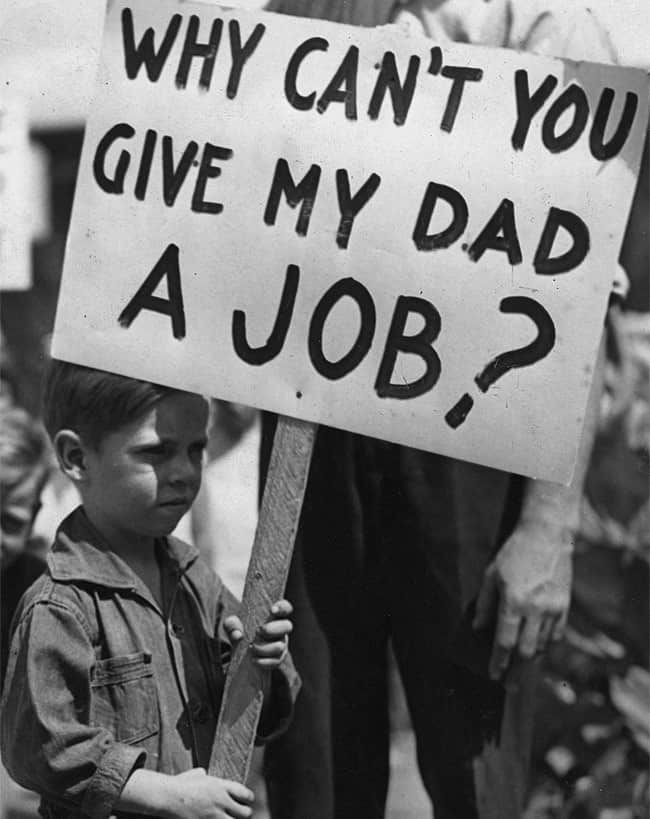
The Great Depression of 1929 was more than just an economic collapse; it was a turning point that transformed global economies and redefined financial systems. Triggered by the Wall Street stock market crash in October 1929, the Depression rippled across continents, leading to mass unemployment, widespread poverty, and a collapse of trade. Its consequences were so profound that governments worldwide were forced to rethink economic policies, social welfare, and the very role of the state in markets.
The Collapse of the American Economy
The United States, then the world’s leading economic power, was at the heart of the crisis. Banks failed by the thousands, factories shut down, and nearly one in four Americans found themselves unemployed. Agricultural prices plummeted, forcing farmers off their land. The collapse of the American economy created a domino effect, given that the U.S. had been a key lender and trading partner to many countries following World War I.
Global Ripple Effects
Europe, already struggling with post-war reconstruction and debt repayments, was particularly vulnerable. Germany, burdened with reparations under the Treaty of Versailles, saw its fragile economy collapse further as American loans dried up. Unemployment soared, and social unrest intensified, creating conditions that would later fuel the rise of extremist ideologies, including Nazism. Britain and France also faced shrinking trade, industrial decline, and growing political instability.
In Asia, Latin America, and Africa, countries dependent on commodity exports suffered deeply. Falling prices of raw materials like coffee, rubber, and sugar devastated local economies. Colonies, tied to European markets, experienced reduced investment and economic stagnation. The Depression exposed the vulnerability of nations overly reliant on a single crop or export.
Shifts in Economic Thinking
Perhaps the most lasting impact of the Great Depression was the shift in economic thought. The crisis shattered faith in laissez-faire capitalism and forced governments to take a more active role in managing economies. In the United States, President Franklin D. Roosevelt’s New Deal introduced public works programs, social security, labor rights, and banking reforms. These measures did not fully end the Depression but redefined the relationship between government and citizens, laying the foundation for the modern welfare state.
In Britain, policies turned toward managed trade and protectionism, with efforts to stabilize industries and currencies. Across Europe, governments increasingly intervened in markets to maintain employment and support industries. While some nations turned toward state-led capitalism, others, tragically, embraced authoritarian solutions, linking economic hardship with nationalist and militaristic agendas.
International Trade and Protectionism
The Depression also reshaped global trade. Countries adopted protectionist policies, imposing tariffs and restricting imports to shield domestic industries. The U.S. Smoot-Hawley Tariff Act of 1930 worsened the crisis by triggering retaliatory tariffs, leading to a sharp decline in international trade. This fragmentation of the global economy highlighted the dangers of isolationism and underscored the need for international economic cooperation, which later influenced the creation of institutions like the International Monetary Fund (IMF) and the World Bank after World War II.
Social and Political Consequences
The economic collapse left deep social scars. Millions of families lost homes and livelihoods, leading to widespread migration in search of work. In the U.S., the Dust Bowl compounded suffering, forcing farmers to abandon land ruined by drought and poor agricultural practices. Globally, despair fueled political radicalization. While some nations embraced reforms and social welfare, others turned to authoritarian regimes that promised stability and revival, often at the cost of democracy.
A Blueprint for the Future
The Great Depression reshaped global economies by proving that unregulated markets could collapse catastrophically and that governments must intervene to protect citizens. It paved the way for social security systems, unemployment benefits, public investment in infrastructure, and stronger labor rights. Moreover, the crisis highlighted the need for international economic institutions, leading to the establishment of Bretton Woods systems in the 1940s.
The Great Depression was a global shock that dismantled old economic orders and forced the creation of new ones. It redefined the role of governments, reshaped trade policies, and influenced political ideologies worldwide. While the suffering it caused remains a tragic chapter in history, the lessons drawn from the Depression continue to shape economic policies even today, reminding nations of the delicate balance between free markets and state responsibility.