


India’s struggle for independence is often remembered through the stories of charismatic leaders, mass movements, and revolutionary battles. Yet, behind the scenes, another set of unsung heroes operated quietly but decisively—spies. These individuals risked their lives to gather intelligence, infiltrate enemy networks, and outsmart colonial authorities. Their contributions were not always visible in public rallies or speeches, but they played a vital role in sustaining the freedom struggle.
Espionage During the Early Revolts
The importance of intelligence was recognized as early as the Revolt of 1857. Rebel leaders relied on secret messengers to coordinate attacks and pass military information. Codes, symbols, and disguised couriers helped rebels communicate across territories while avoiding British surveillance. Though the uprising was suppressed, it revealed how vital clandestine networks could be in challenging colonial power.
The Ghadar Conspiracy and International Networks
During World War I, espionage became even more critical. The Ghadar Party, formed by Indian expatriates in North America, sought to overthrow British rule by triggering armed uprisings in India. Members relied on coded letters, false identities, and smuggling of arms. The British cracked down on the movement using their own intelligence networks, but the Ghadar conspiracy highlighted the global scale of espionage in India’s freedom struggle.
Revolutionary Spies and Underground Networks
Several revolutionary groups in Bengal, Punjab, and Maharashtra depended on informants and secret operatives. The Anushilan Samiti and Hindustan Socialist Republican Association (HSRA) built underground cells where spies tracked police movements, intercepted telegrams, and ensured the safety of leaders. For instance, Chandrashekhar Azad and Bhagat Singh frequently changed hideouts with the help of informants embedded in British administrative circles. Without these networks, revolutionary actions like the Kakori Train Robbery or protests against the Simon Commission would have been nearly impossible.
Netaji and the INA’s Intelligence Wing
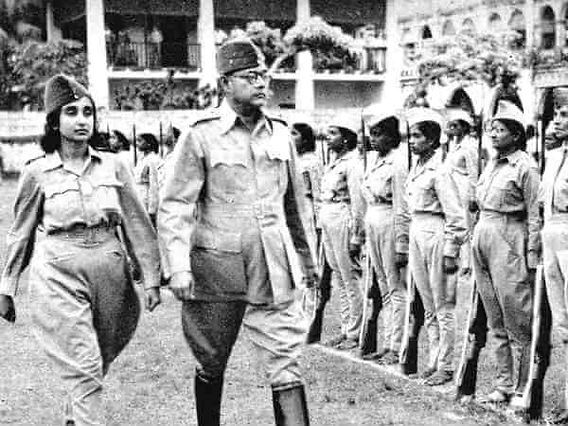
Subhas Chandra Bose’s Indian National Army (INA) relied heavily on espionage during World War II. The INA formed its own intelligence wing, recruiting Indians in Southeast Asia to monitor British troop movements and collect war-related information. Bose’s men used covert radio transmissions and secret codes to stay in touch with allies, including the Japanese. Spies not only relayed information but also spread propaganda to inspire Indian soldiers in the British Army to defect. This psychological warfare was as important as battlefield combat.
Women Spies in the Freedom Struggle
Women, often underestimated by colonial authorities, also played a significant role in espionage. They carried secret messages, transported arms, and acted as couriers under the guise of ordinary domestic roles. Figures like Durga Bhabhi, who once disguised herself to help Bhagat Singh escape British detection, demonstrated how women revolutionaries used espionage to protect and advance the movement. Their courage showed that intelligence work was not limited by gender.
Counterintelligence and British Surveillance
While Indian revolutionaries relied on spies, the British were equally dependent on intelligence networks to suppress dissent. The Criminal Investigation Department (CID) closely monitored leaders, intercepted letters, and placed informants within political organizations. This cat-and-mouse game forced Indian nationalists to develop more sophisticated methods—using invisible ink, pseudonyms, and underground printing presses to stay ahead. The success of many revolutionary operations was measured by how effectively spies could outwit British surveillance.
Silent but Crucial Contributions
Unlike mass protests, espionage rarely drew public recognition. Spies worked silently, often without glory or acknowledgement. Many were caught, tortured, or executed, their identities erased from mainstream history. Yet, their work bought precious time for leaders, safeguarded revolutionary activities, and kept communication alive during critical moments.
The story of India’s independence cannot be told without acknowledging the shadowy world of spies. They were the invisible threads binding revolutionary networks, ensuring movements survived despite British repression. From decoding military strategies to enabling daring escapes, spies embodied courage of a different kind—silent, secretive, and selfless. Their legacy reminds us that freedom was not won by speeches alone but also by those who operated in the hidden corridors of resistance.