


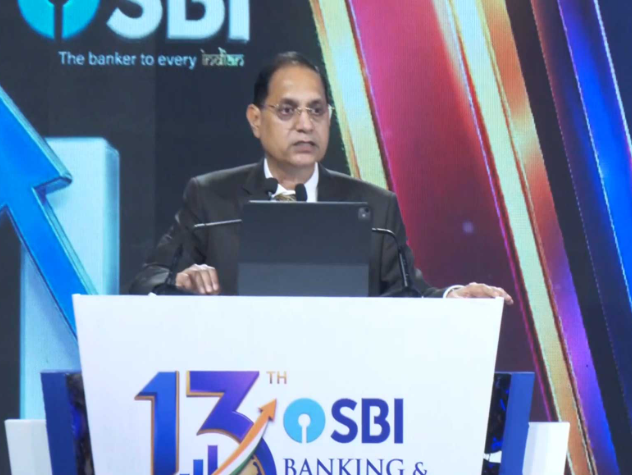
MUMBAI
He said different sectors require different forms of finance. While banks remain important for project assessment, credit disbursement and relationship monitoring, some businesses require risk capital, long-term infrastructure funding or equity before they become suitable for conventional debt.
Pandey said India’s market capitalisation has grown at a compound annual rate of about 17 per cent since FY16, reaching nearly Rs 481 trillion. Domestic companies have raised an average of around Rs 10 trillion annually through equity and debt issuances over the past decade.
The mutual fund industry’s assets under management stood at about Rs 87 trillion in August 2026, while the unique investor base reached roughly 150 million.
Pandey also highlighted the growing importance of the corporate bond market. Outstanding corporate bonds stood at around Rs 61 trillion in August, equivalent to about 55 per cent of outstanding bank credit to industry and services.
SEBI, he said, has taken steps to improve access and liquidity in the corporate bond market, including reducing minimum face values for privately placed debt and lowering thresholds for electronic book platforms.
The regulator has also introduced measures aimed at speeding up IPO and rights issue processes, while exploring bond tokenisation under DEMAT 2.0.
“The broader principle is straightforward. Ease of doing business and investor protection are not competing objectives,” Pandey said, adding that regulation should reduce unnecessary friction while preserving investor trust.