

Washington
The expansion of the FIFA World Cup 2026 from 32 to 48 teams has triggered intense debate over whether a larger tournament can remain competitive while also fulfilling FIFA’s ambition of making football more global and commercially successful.
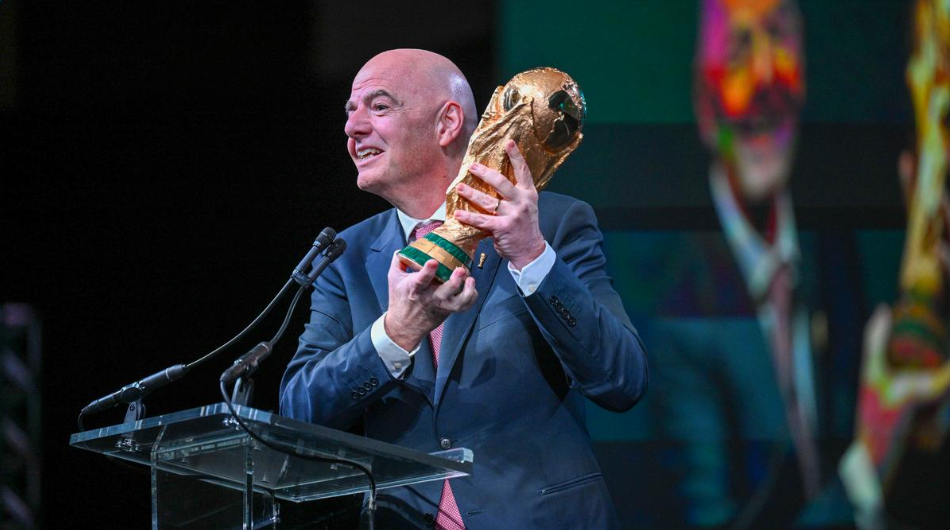
Under the leadership of Gianni Infantino, FIFA has pushed aggressively toward expansion, with the upcoming World Cup set to feature 104 matches spread across more than a month. The move is expected to significantly increase revenue, with FIFA projections estimating earnings of over £5 billion from the tournament.
The tournament’s broader reach has allowed several smaller footballing nations such as Curacao, Cape Verde and Haiti to qualify for the global showpiece, offering them unprecedented exposure on football’s biggest stage.
For regions such as Africa and Asia, the expansion is viewed as a major opportunity. African football once protested against limited World Cup representation by boycotting the 1966 edition, and the expanded format now offers more places to emerging football nations.
The inclusion of more teams could also recreate historic underdog moments such as Cameroon national football team’s remarkable run in 1990 or South Korea national football team reaching the semifinals in 2002.
However, critics fear the increase in teams may dilute the tournament’s competitiveness. Recent examples from the expanded FIFA Club World Cup raised concerns after heavy mismatches, including Bayern Munich defeating Auckland City FC 10-0.
Football economists have long argued that fan interest depends heavily on uncertainty and closely contested matches. Critics worry that fixtures involving major powers against significantly weaker nations could reduce excitement during the group stage.
Matches such as Brazil national football team versus Curacao or England national football team against Ghana national football team are already being viewed as potentially one-sided encounters.
Former German football chief Reinhard Grindel had previously opposed expansion, insisting the traditional 32-team model offered a more balanced competition.
Still, football history shows expansion can produce mixed outcomes. While the 1982 tournament saw lopsided results, the 1998 expansion to 32 teams largely succeeded without significantly harming competitive balance.
As the 2026 World Cup approaches, FIFA’s gamble now rests on whether greater inclusivity and commercial growth can coexist with the drama and unpredictability that made the tournament the world’s most celebrated sporting spectacle.