


Seoul
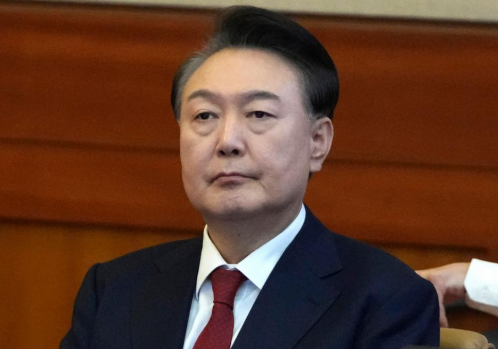
A court in South Korea on Thursday sentenced former President Yoon Suk Yeol to life imprisonment after finding him guilty of masterminding an insurrection tied to his December 2024 attempt to impose martial law.
The verdict marks a dramatic fall for the ousted leader and represents one of the most consequential rulings in the nation’s modern political history.
Prosecutors had sought the death penalty, underscoring the gravity of the charges in a country deeply divided over Yoon’s leadership and the events that unfolded late last year. The trial, closely watched domestically and internationally, centered on allegations that Yoon conspired to undermine the constitutional order in a bid to consolidate power during a period of political tension.
Delivering the judgment before a packed courtroom, Judge Jee Kui-youn said Yoon had conspired with his then defence minister, Kim Yong-hyun, to deploy troops to parliament in an effort to paralyse its legislative functions. According to the court, armed soldiers were sent to the National Assembly building on December 3, 2024, and equipment was used in attempts to carry out arrests of political figures.
It is the court’s judgment that sending armed troops to parliament and using equipment to try to make arrests all constitute acts of insurrection, Judge Jee stated on behalf of a three-judge panel. He added that the declaration of martial law resulted in enormous social and political costs, triggering widespread protests and shaking confidence in democratic institutions.
The court concluded that Yoon led officials and military personnel in criminal activities that directly challenged constitutional governance. The life sentence reflects what the judges described as the seriousness of attempting to subvert democratic order through force. The ruling is the latest in a series of legal battles facing the former president since his removal from office. Analysts say the decision will have lasting implications for South Korea’s political landscape and serve as a defining test of the country’s democratic resilience.