


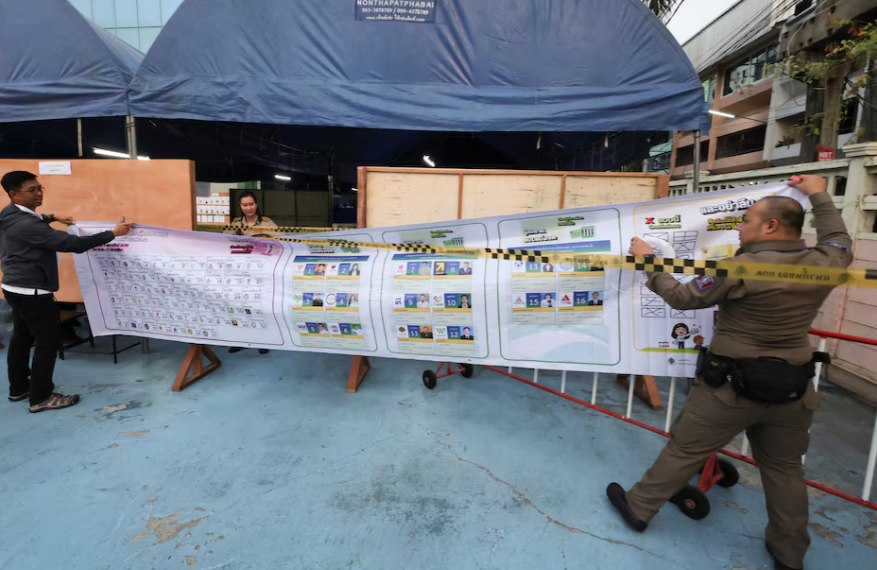
Intro: Thai voters turned out Sunday for a snap general election amid instability, nationalism, and a fragmented three-way contest.
Bangkok
Voters across Thailand went to the polls on Sunday in a high-stakes general election shaped by a fierce three-way contest among conservative, progressive, and populist political camps. With opinion polls and analysts broadly agreeing that no single party is likely to win an outright majority, the election outcome is expected to usher in a prolonged period of negotiations and political uncertainty, reviving long-standing concerns about instability in the country’s governance.
The snap election was called in mid-December by Prime Minister Anutin Charnvirakul, a move that surprised both opposition parties and some allies within the ruling coalition. The decision came at a time when tensions were escalating along the border with Cambodia, following a series of confrontations that dominated domestic headlines and fueled nationalist sentiment. Political analysts say the timing of the election was strategic, allowing the conservative leadership to appeal to voters through themes of national security, unity, and strong leadership during a period of external threat.
The conservative bloc has sought to position itself as the guarantor of stability and sovereignty, emphasizing its experience in governance and its role in managing the border crisis. Campaign rallies highlighted the need for continuity and decisive action, arguing that a fragmented parliament could weaken Thailand’s ability to respond to regional challenges.
Opposing them, progressive parties have campaigned on promises of political reform, reduced military influence in civilian affairs, and expanded civil liberties. They have drawn strong support from younger voters and urban constituencies, framing the election as a chance to break with decades of elite-dominated politics. Meanwhile, populist parties have focused on economic concerns, pledging higher welfare spending, debt relief, and measures to ease the cost-of-living pressures affecting rural and working-class voters.
Election officials reported steady turnout throughout the day, reflecting the public’s keen interest in the vote despite widespread expectations of a hung parliament. Observers noted that coalition-building could take weeks, if not months, as parties negotiate alliances in a deeply polarized political landscape.