


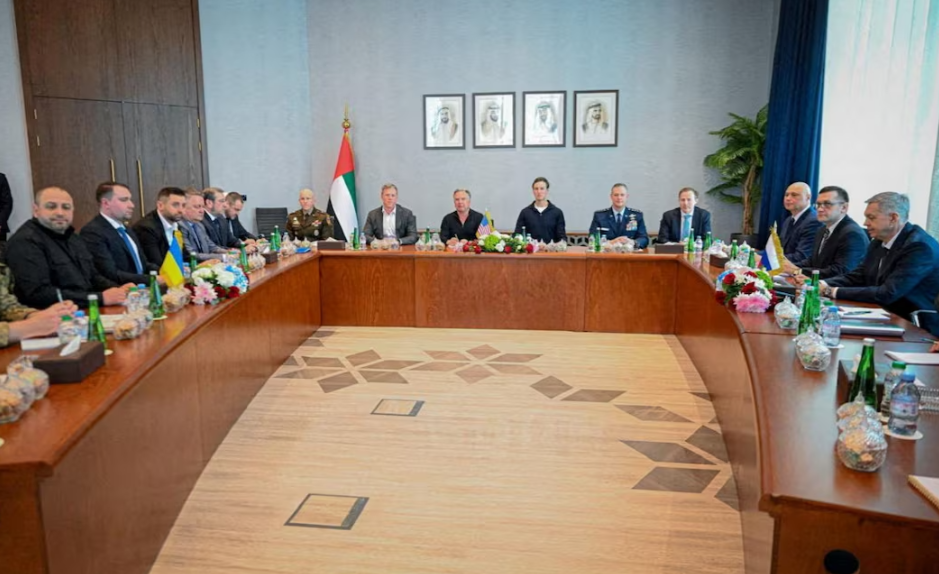
Blurb: Ukraine-Russia resumed US-brokered negotiations in Abu Dhabi, aiming to end Europe’s deadliest conflict since World War II.
Moscow
Ukraine and Russia on Thursday entered the second day of U.S.-brokered peace talks in Abu Dhabi, raising cautious hopes for progress toward ending the most destructive conflict in Europe since World War II. Officials from both sides described the first day of discussions as productive, signaling a rare moment of convergence after four years of intense fighting.
The negotiations are being closely watched by the international community, as the war between Ukraine and Russia has reshaped global geopolitics, disrupted energy markets, and triggered one of the largest humanitarian crises in decades. The talks are facilitated by the United States, which has played a central diplomatic role in bringing both sides to the table.
Speaking on Thursday, Kirill Dmitriev, an envoy of Russian President Vladimir Putin, said there had been tangible progress and a positive movement forward in discussions focused on ending the war. Dmitriev also noted that parallel efforts were underway to restore strained relations between Moscow and Washington, including through a U.S.–Russia economic working group.
On the Ukrainian side, chief negotiator Rustem Umerov described Wednesday’s talks as meaningful and productive, emphasizing that discussions centered on concrete steps and practical solutions rather than abstract principles. Announcing the continuation of negotiations, Umerov said the second day would follow the same structure as the first, involving trilateral consultations, group discussions, and joint coordination of positions.
The second day of negotiations in Abu Dhabi has begun, Umerov said in a message posted on the Telegram app, underscoring Kyiv’s cautious optimism while avoiding any premature declarations of breakthrough.
Diplomatic sources said the agenda includes security guarantees, humanitarian arrangements, and mechanisms to prevent further escalation. While major disagreements remain, analysts say the tone of the talks marks a notable shift from months of stalled diplomacy and battlefield stalemate.
Despite guarded optimism, officials from both sides stressed that the process remains complex and fragile. Any eventual agreement would require sustained engagement, political will, and support from international partners.