


Jakarta
The death toll from a landslide that struck Indonesia’s West Java province over the weekend has risen to 17, according to the country’s disaster mitigation agency, as rescue teams continue searching for dozens of missing residents under difficult conditions. Authorities warned that ongoing heavy rainfall could further complicate recovery efforts in the coming days.
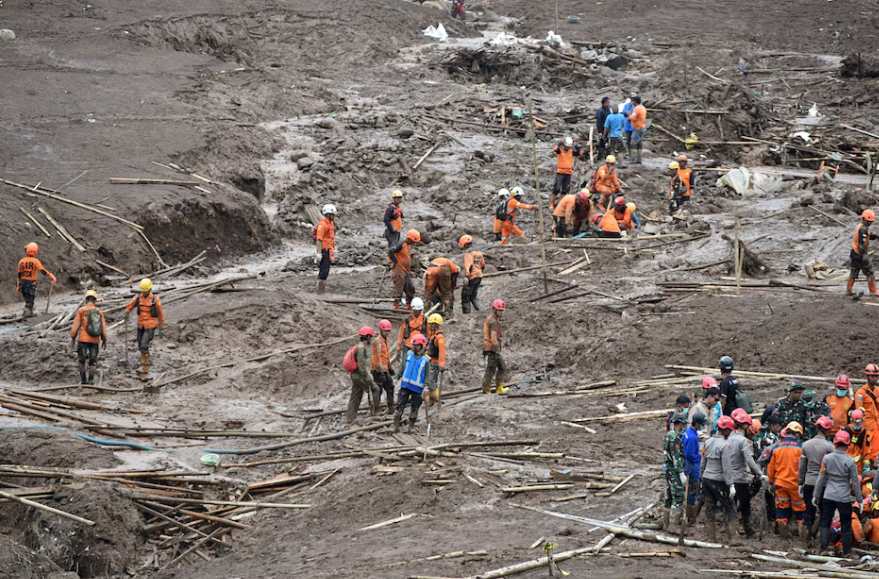
The landslide hit a residential area in the Bandung Barat region early after days of intense rainfall weakened soil on steep hillsides. The disaster agency said heavy rains began on Friday and triggered the collapse, sending large volumes of mud, rocks, and debris into nearby homes while residents were still inside.
The impacted Pasir Langu village lies in a hilly part of West Java, about 100 kilometres southeast of Jakarta, Indonesia’s capital. Officials said the area is particularly vulnerable to landslides during the rainy season due to its steep terrain and dense settlements built along unstable slopes.
More than 30 houses were buried by the landslide, leaving families trapped and cutting off access routes. Search and rescue teams, supported by local volunteers, have been working around the clock using heavy machinery and manual tools to locate survivors. However, unstable ground conditions and the risk of further landslides have slowed operations.
At least 17 people have died, with 73 still missing, disaster agency spokesperson Abdul Muhari told Reuters on Monday. He added that the number of casualties could rise as rescuers reach areas that remain inaccessible. Emergency shelters have been set up for displaced residents, while aid including food, blankets, and medical supplies is being distributed.
Indonesia’s meteorological agency has warned that heavy rainfall is expected to continue in West Java and several other regions for at least another week. Authorities have urged residents in landslide-prone zones to remain alert and follow evacuation orders if conditions worsen.
Landslides are common in Indonesia during the rainy season, particularly in mountainous and hilly regions. Experts say deforestation, poor land management, and unregulated construction have increased the risk of such disasters in recent years.