


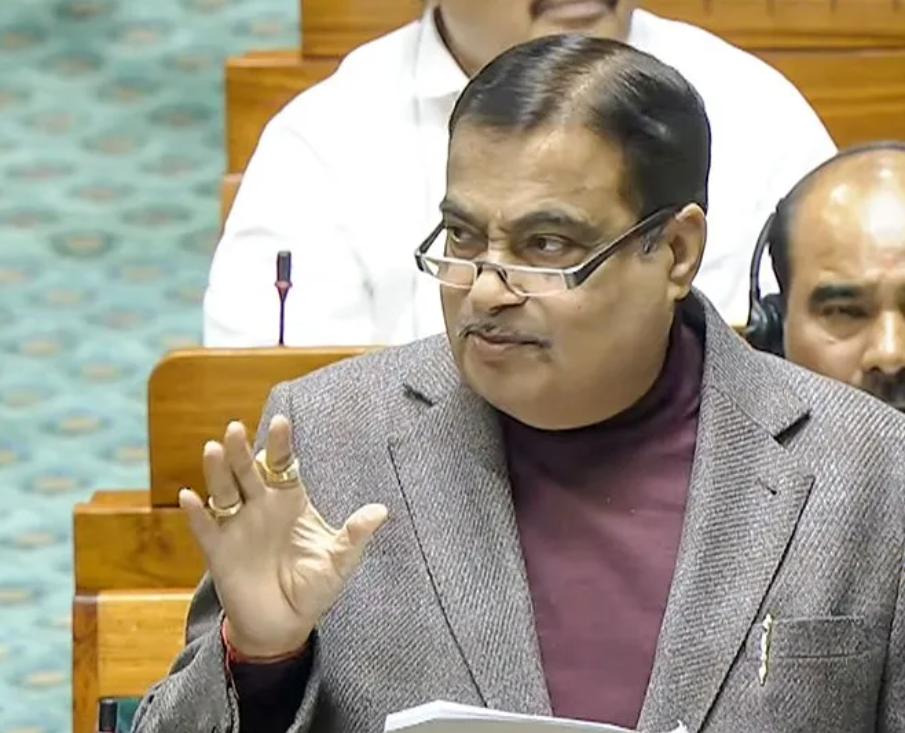
Gadkari told Lok Sabha ethanol-blended petrol reduced fuel imports, boosted farmer income and showed no negative vehicle impact.
New Delhi
Union Road Transport and Highways Minister Nitin Gadkari informed the Lok Sabha on Thursday that the use of ethanol-blended petrol has enabled the country to save more than ₹1.40 lakh crore in foreign exchange while simultaneously offering significant benefits to farmers.
Addressing concerns raised by several members, Gadkari said that extensive testing has revealed no negative impact on vehicles using ethanol-blended fuel. He emphasised that the rollout of E20 petrol is a major step towards a cleaner and greener future, highlighting that ethanol-blended petrol helps reduce pollution and lowers India’s reliance on expensive crude oil imports.
The minister also noted that farmers have earned nearly ₹40,000 crore by supplying raw materials such as sugarcane and maize used in ethanol production. This, he said, has strengthened rural income and encouraged sustainable agricultural practices.
Responding to questions about vehicle compatibility with E10 and E20 fuel standards, Gadkari outlined the government’s policy framework. He said vehicle manufacturers must declare whether a particular model is compatible with E20 fuel, and this information must be displayed clearly on the vehicle through a visible sticker.
Gadkari further clarified that vehicles sold before April 1, 2023, are compatible with E10 fuel, whereas those sold after this date have been manufactured using materials compliant with E20 standards. Safety guidelines for E20 fuel have been formulated through BIS specifications and Automotive Industry Standards, ensuring that drivability, startability and compatibility of metal and plastic components remain unaffected.
The minister assured the House that no phase-out or modification of older, non-E20-compliant vehicles is necessary. Citing a study conducted by ARAI, IOCL and SIAM, he said normal wear and tear from using ethanol-blended fuel can be effectively managed through routine servicing and that no special retrofitting programme is required.