


CH NEWS, BENGALURU
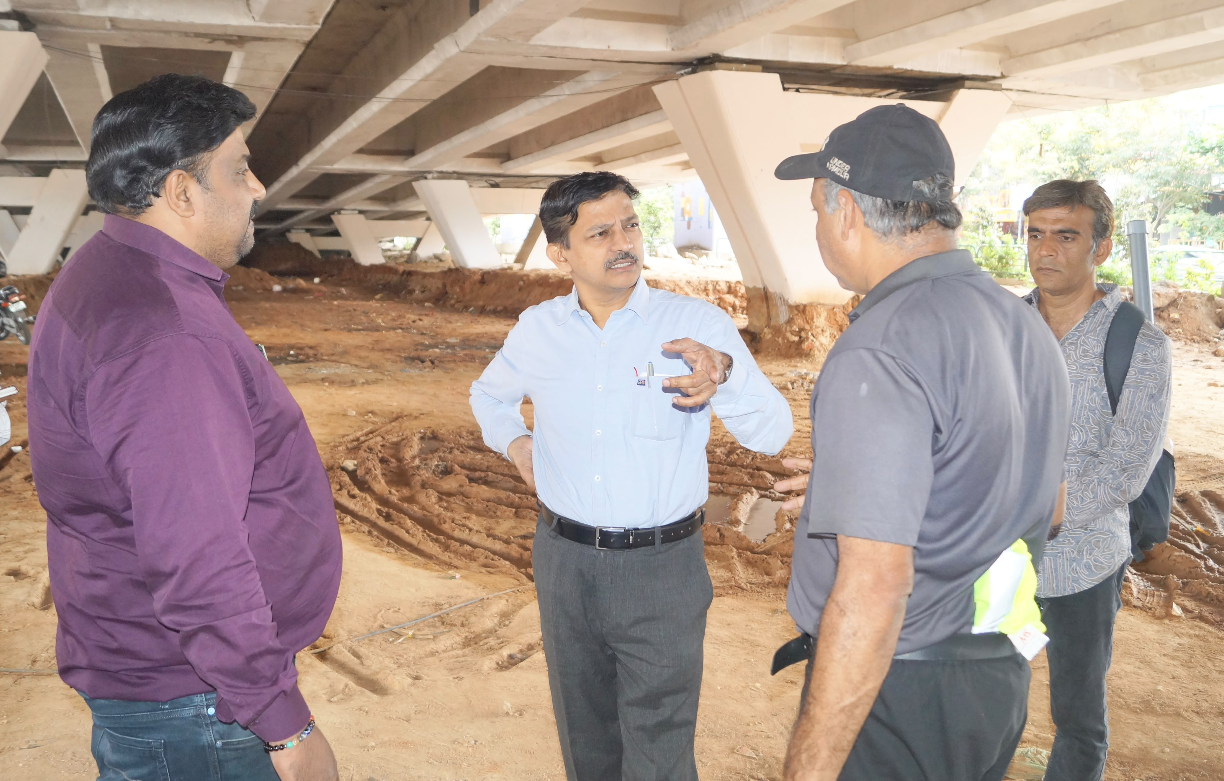
In a major initiative aimed at reclaiming neglected urban spaces and prioritizing pedestrian welfare at one of the city’s most congested transit hubs, Bengaluru South City Corporation Commissioner K. N. Ramesh conducted an extensive on-site inspection beneath the Silk Board flyover along the Hosur route, issuing strict directives for its immediate transformation into a clean, pedestrian-friendly public amenity.
Recognizing the immense daily footfall at the crucial Silk Board junction, where thousands of commuters converge to transition between buses, private vehicles, and metro lines, Commissioner Ramesh instructed municipal engineers to draft a comprehensive developmental blueprint. The proposal is modeled directly on the successful public-space transformation previously executed beneath the Bellandur flyover. Central to the new plan is the construction of designated seating and resting shelters, ensuring that weary commuters and citizens waiting for public transport have access to clean, shaded resting areas rather than being forced to wait precariously on crowded roadways.
The revitalization project will rely on a collaborative public-private framework. During the inspection, Arun Pai, head of the Walkaluru NGO—which spearheaded the artistic transformation of the Bellandur site—formally proposed a joint partnership. Under this arrangement, the Walkaluru organization will deploy artists this upcoming weekend to execute vibrant, attractive wall paintings and mural installations across the massive concrete pillars supporting the Silk Board flyover, while the municipal corporation handles foundational civil infrastructure development.
To tackle long-standing hygiene and safety concerns, the Commissioner issued direct orders to clear accumulated debris, level the uneven ground beneath the structure, and cover open storm-water drains (rajakaluve) securely with heavy-duty concrete slabs. These engineering interventions are designed to create a continuous, unobstructed walking corridor for pedestrians. Furthermore, the civic body will install high-intensity decorative and security lighting, converting a previously dark, unhygienic space into a brightly illuminated, safe public zone that does not interfere with surrounding vehicular traffic flow.
Special emphasis was placed on connectivity between transit modes. The Commissioner ordered engineers to construct a robust, wide footpath bridging the gap between the Silk Board Metro Station and the nearby BMTC bus stand, shielding daily commuters from negotiating muddy verges and heavy traffic. Accompanying civil works will incorporate a redesigned stormwater drainage network specifically engineered to eliminate chronic monsoon waterlogging along the pedestrian pathway.
Concluding the inspection, Commissioner Ramesh directed municipal Executive Engineers and NGO representatives to collaborate on a final, detailed feasibility blueprint outlining the aesthetic and structural transformation of the junction. Corporation engineers and Walkaluru head Arun Pai participated in the rigorous site walkthrough, laying the groundwork for what officials hope will become a benchmark for urban dead-space reclamation across southern Bengaluru.