


Mysuru:
Human trafficking is a serious assault on an individual’s dignity, physical well-being and personal freedom. Rehabilitation of victims is not merely a matter of government policy but an integral part of the right to live with dignity guaranteed under Article 21 of the Indian Constitution, said Principal District and Sessions Judge and Chairperson of the District Legal Services Authority (DLSA), Usharani.
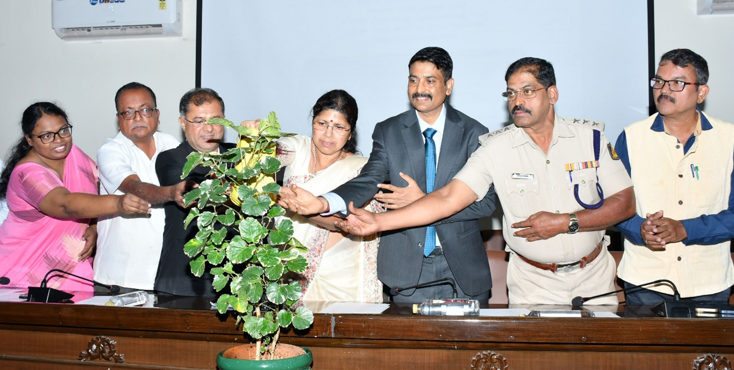
Presiding over a programme organised jointly by the district administration, Zilla Panchayat, DLSA and various organisations here on Thursday on the occasion of World Day Against Trafficking in Persons and the Udaya Hejje Association of Bonded Labourers, she said this year’s theme, “Trapped Behind the Scam,” highlights the need to create awareness about new trafficking networks that lure and exploit people through online cybercrimes and fraudulent schemes. The the government has a positive obligation to ensure the physical, psychological, social and economic rehabilitation of survivors of human trafficking. Preventing trafficking is not the responsibility of the police or government alone. Society must also play an active role, particularly by educating children to immediately inform their parents, teachers or authorities if they encounter suspicious strangers or situations.
She noted that recently, a joint raid conducted by the DLSA, police, revenue officials and NGOs on brick kilns in Devanahalli of Sosale hobli resulted in the rescue of 18 adults and seven children, who were subsequently issued release certificates.
Poverty, unemployment, addictions, online fraud, false promises of opportunities in films and assurances of overseas employment are among the factors that make people vulnerable to trafficking, she said. More than 60 per cent of the victims are women and children below the age of 18.
Vikas Samsthe President Vergis Cleetus said bonded labour was no longer limited to people being physically chained. Poor workers arriving from Bihar, Tamil Nadu, Madhya Pradesh and Uttar Pradesh in search of employment were increasingly being trapped in debt and exploited. Such exploitation was prevalent in coffee plantations, quarries, sugarcane-cutting operations and shooting locations in Mysuru, Chikkamagaluru, Mandya, Kodagu and Uttara Kannada districts.
Under the Bonded Labour System (Abolition) Act, 1976, nearly 23 departments, including the Revenue, Labour and Social Welfare departments, need to work together to secure the release and rehabilitation of bonded labourers. Obstacles in registering FIRs must be removed and the rehabilitation assistance of Rs. 30,000, which is to be provided immediately after release, should reach the beneficiaries without delay, he said.
Women and Child Development Department Deputy Director R. Nagaraju said
the district administration, departmental officials and voluntary organisations had recently jointly undertaken the rescue of bonded labourers and awareness programmes in the Bevanahalli area of T. Narasipura taluk. Bonded labour and human trafficking could be completely eradicated by working with humanity, compassion, love and trust under the Constitution given by Dr. B.R. Ambedkar. The Women and Child Development Department and district administration would extend full support to such people-oriented initiatives in collaboration with voluntary organisations, he added.
Senior Civil Judge and DLSA Member-Secretary Nagaraj Siddappa Ankasadoddi, Advocates’ Association president Lokesh S., Child Welfare Committee chairman Ravichandra, M.A.P. Rajendra, Prajwal, Vijay Kumar and others were present.