


Arms Act, PSARA Licensing, and Enforcement
The Arms Act, 1959 forms the backbone of firearm regulations in India. Under this statute, civilians (including private security personnel) can hold weapons only with strict licensing and compliance. However, enforcement challenges have surfaced. For instance, in earlier public litigation, the Centre told the Supreme Court there was no specific regulation governing the use of arms by private security agencies once they were licensed — opening concerns about potential misuse and the lack of oversight.
Parallel to firearm laws is the Private Security Agencies (Regulation) Act (PSARA), 2005, which governs licensing and operations of security firms that supply guards and bodyguards. In Karnataka, businesses must obtain a PSARA license from the State Home Department to legally deploy guards, bodyguards, and other security services; operating without one leads to penalties and legal liabilities.
Despite these frameworks, implementation remains inconsistent. A local investigation in Bengaluru revealed that only around 400 of nearly 950 private security firms in the state were properly registered, with many operating illegally. Additionally, many agencies fail to provide mandated training, raising concerns about preparedness and professionalism.
Arms Act and its limitations regarding private armed guards
- PSARA licensing requirements and compliance challenges in Karnataka
- Gaps between law and enforcement
Caste, Class, and Power Dynamics
Who Gets Protection — and Who Pays the Price
Security culture in India is inseparable from social hierarchy. Traditionally, those with wealth and influence — from feudal landlords to corporate chiefs — could command protection. This dynamic persists today: affluent neighbourhoods in Bengaluru and other cities hire private guards and armoured car escorts, while residents of lower-income areas often must rely on minimal official policing.
Scholars and analysts note that underlying caste and class inequalities shape the security industry itself. Many private guards hail from economically weaker backgrounds and rural regions, with little say in their working conditions. They tend to be contract labor, poorly paid, and lacking benefits, even as they serve clients from elite classes.
This dynamic raises ethical questions. Protection may be abundant for the elite, but for the average citizen — migrant workers in Bengaluru or small business owners in townships — safety often means counting on overcrowded police forces rather than armed detachment.
Private Security Industry Boom in India
Growth, Demand, and Complexity
India’s private security sector is one of the fastest-growing industries in the country. With police-to-population ratios below United Nations recommendations, private security guards — licensed and unlicensed — fill a gap across corporate campuses, hospitals, malls, tech parks, and residential complexes in metros like Bengaluru.
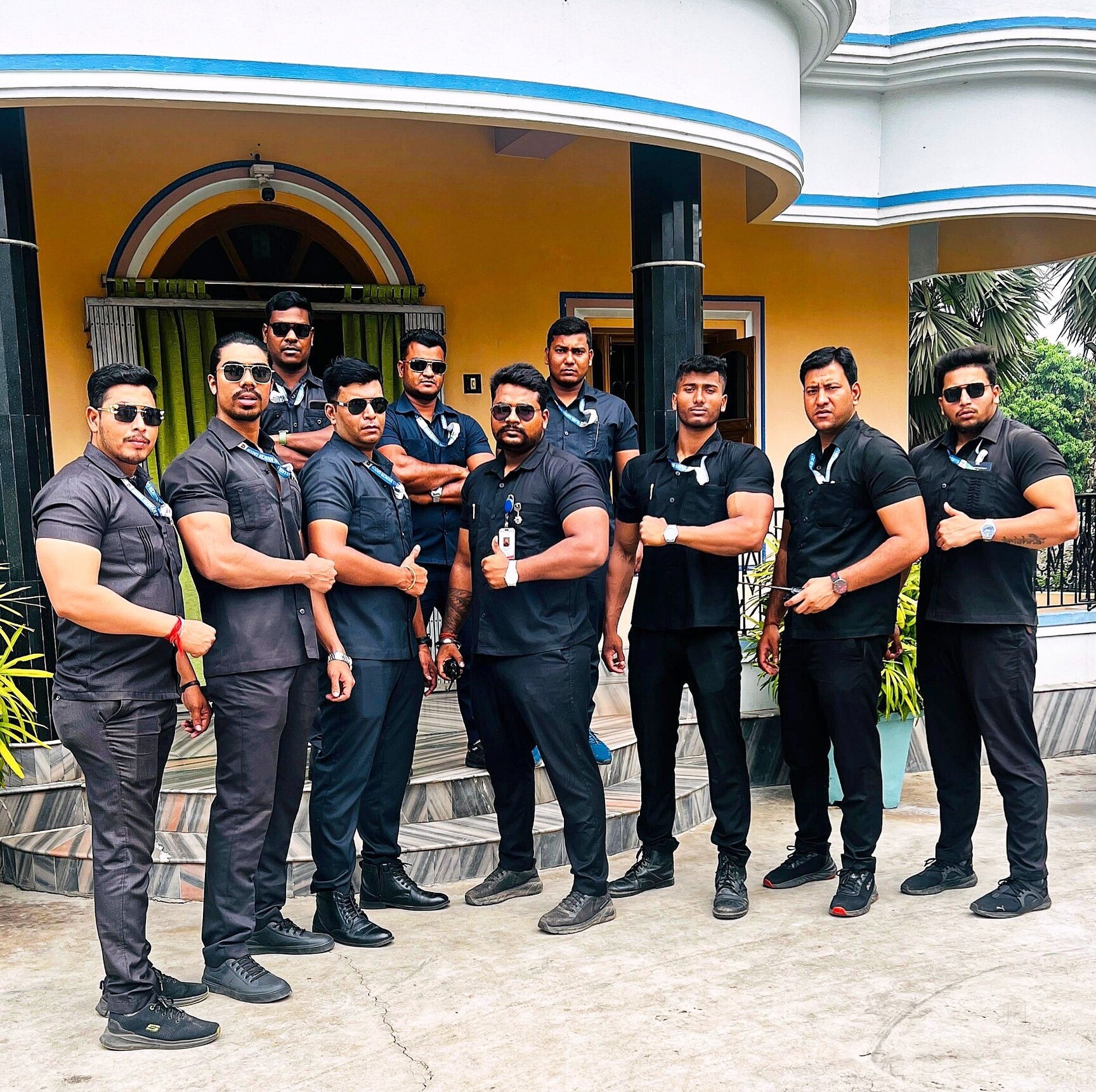
Firms now offer a range of services: unarmed guards, armed gunmen, executive protection, and specialized bodyguard services tailored to corporate executives and VIPs. Several agencies in Bangalore and Karnataka market armed gunman services for banks, cash transit, and high-risk personal protection.
Yet this boom has complexity. While demand has surged, industry regulation has lagged. Enforcement of training standards and background checks varies, and clients sometimes hire cheaper, non-compliant security providers. Even in well-heeled communities, the security industry’s rapid growth raises questions about professionalism versus profitability.
- Expansion of private security in urban India
- Services offered and specialization trends
- Regulatory and quality challenges
Gunmen as Status Symbols
Power, Prestige, and Visibility
In certain Indian socio-political circles, having armed protection — even beyond what law or threat levels logically require — becomes a symbol of prestige and influence. Politicians, film stars, industrialists, and even some wealthy technocrats in Bengaluru and elsewhere may employ visible security details.
This trend overlaps with India’s broader “status goods” culture, where cars, homes, and personal entourages signal success. Armed guards — especially in conspicuous uniforms — can embody that same cultural script. While some individuals genuinely require such protection due to real threats, others use it as an emblem of social position.
It’s worth noting that this phenomenon intersects with public perceptions. A local social media trope in Bengaluru jokes about residents reacting strongly (but humorously) even when confronted with celebrity bodyguards blocking traffic — a cultural flashpoint that underscores how armed protection can also provoke public attitudes and reactions.
- Armed guards as symbols rather than solely protectors
- Public perception and cultural narratives
- Local anecdotes reflecting attitudes toward visible security
Conclusion: Guarded Realities
The terrain of bodyguards and gunmen culture in India is a mosaic of legal regulation, economic impetus, social hierarchy, and cultural representation. In cities like Bengaluru, the ubiquity of private security reflects both real concerns — from crime prevention to personal threats — and broader socioeconomic currents.
While armed protection provides safety and peace of mind for some, it also raises questions about equity, professionalism, policy enforcement, and the privatization of what was once a core public function. As India’s urban landscapes continue evolving, the culture of bodyguards and gunmen will likely remain a potent lens through which to understand power, security, and society itself.