


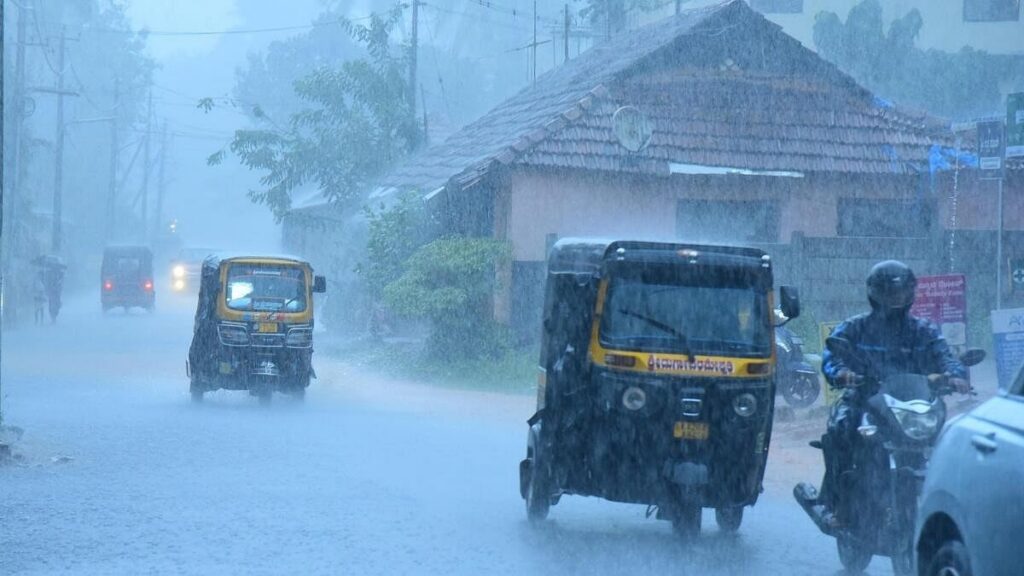
Karnataka weather authorities issued a yellow alert across 15 districts for heavy rains and thunderstorms, offering mixed relief amid widespread agricultural drought conditions.
CH NEWS, BENGALURU
State weather authorities have issued a widespread meteorological warning, forecasting continuous light to moderate rainfall accompanied by intense thunderstorms, frequent lightning, and gusty winds across multiple geographic subdivisions through September 24th.
According to official bulletins released by the State Meteorological Department, a newly developing low-pressure system over the neighboring Bay of Bengal is driving a surge in moisture-laden winds across the southern peninsula. Senior meteorological expert C.S. Patil confirmed that active weather conditions will persist across the coastal belt, North Interior Karnataka, and South Interior Karnataka over the next 5 days.
In response to the developing weather patterns, authorities have issued a precautionary ‘Yellow Alert’ spanning 15 districts. The targeted zones include coastal powerhouses Uttara Kannada, Dakshina Kannada, and Udupi, northern interior agricultural hubs Belagavi, Dharwad, Haveri, Gadag, Bidar, and Kalaburagi, malnad regions Shivamogga, Chikkamagaluru, Hassan, and Kodagu, as well as the metropolitan expanse of Bengaluru Urban and Bengaluru Rural. For the capital city, meteorologists predict intermittent light to moderate showers, accompanied by surface winds reaching speeds between thirty and forty kilometers per hour, which may cause localized evening traffic disruptions and temporary waterlogging on low-lying thoroughfares.
While isolated pockets received only scattered drizzle initially, widespread precipitation is expected to intensify progressively over the coming days. This impending spell brings a complex mix of relief and concern against the backdrop of a broader seasonal deficit. Persistent rainfall shortages earlier in the monsoon cycle have triggered severe agricultural stress, leading to emerging drought-like conditions across approximately two hundred taluks statewide.
To manage agrarian distress systematically, the state government has officially declared 124 taluks as drought-affected. Under standard administrative disaster guidelines, a taluk qualifies for official drought notification if ground verification surveys confirm agricultural crop loss equal to or exceeding 33 percent. Furthermore, damage assessments surpassing 50 percent are officially classified as severe drought. If extensive surveys reveal severe damage across more than eighty percent of inspected village clusters, administrative categories are promptly upgraded to ensure targeted financial relief and emergency input subsidies reach distressed farming communities.