


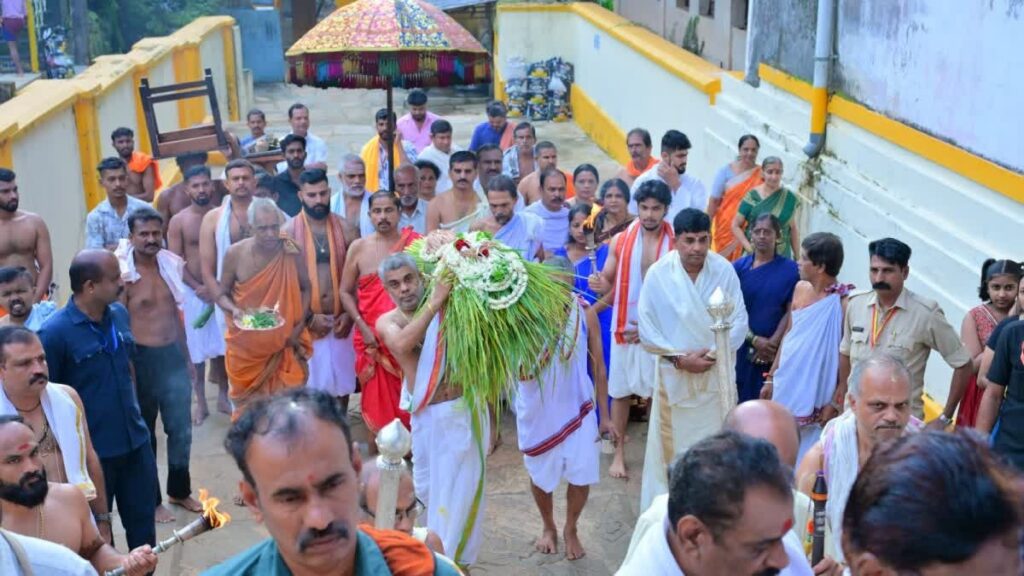
The Hosaki meal is not just a food offering event, but a traditional ritual that expresses the devotional sentiment of ‘the first fruits are for God, God’s offerings are for the devotees
CH NEWS
MANGALURU
The annual traditional Hosakki Oota religious rituals were held at the famous shrine of Kukke Sri Subrahmanya Temple. This unique ritual, where newly harvested grain is first offered to the Lord and then received by the devotees in the form of Prasad, holds a special place in the religious heritage of the area.
The area was filled with religious rituals from early morning. Various rituals including Panchamrutha Mahabhishekam, daily decoration and cow worship were performed for the deity. Later, as per tradition, Tene Puja was performed at Dharpana Theertha.
The duly worshipped grain was brought to the temple and offered to the Lord with the usual rituals. A religious ceremony was performed to express gratitude for the gift of nature by offering the newly harvested grain to the Lord.
The main specialty of the Hosakki meal is to offer the new grain to the deity before directly using it. The tradition of distributing it to the devotees in the form of prasadam after offering it to the deity has been observed since ancient times in the area. Accordingly, after offering it to the deity, Annaprasadam was distributed to the devotees in the afternoon. The devotees accepted the prasadam consisting of various types of items including sweets with devotion. A large number of devotees who had arrived at the area participated in the Annaprasadam and received prasadam of the deity.
A fusion of tradition and devotion: The Hosakki festival holds special significance in the religious traditions of the coastal region, which is closely linked to an agricultural lifestyle. The main idea behind it is that farmers and devotees offer the newly harvested grain to the gods and receive it with the blessings of the gods.
BOX
The new paddy ears grown in the fields are first worshipped through religious rituals and offered to the deity of the area, Sri Subrahmanya Swamy. The main idea of this ritual is that the devotees accept the new grain in the form of prasad only after offering it to the deity, with the feeling that it is a boon received by the grace of God.