


CH NEWS, Bengaluru
Animal husbandry serves as the economic backbone of Karnataka’s rural livelihoods, yet recurring low rainfall and water scarcity severely restrict green fodder availability.
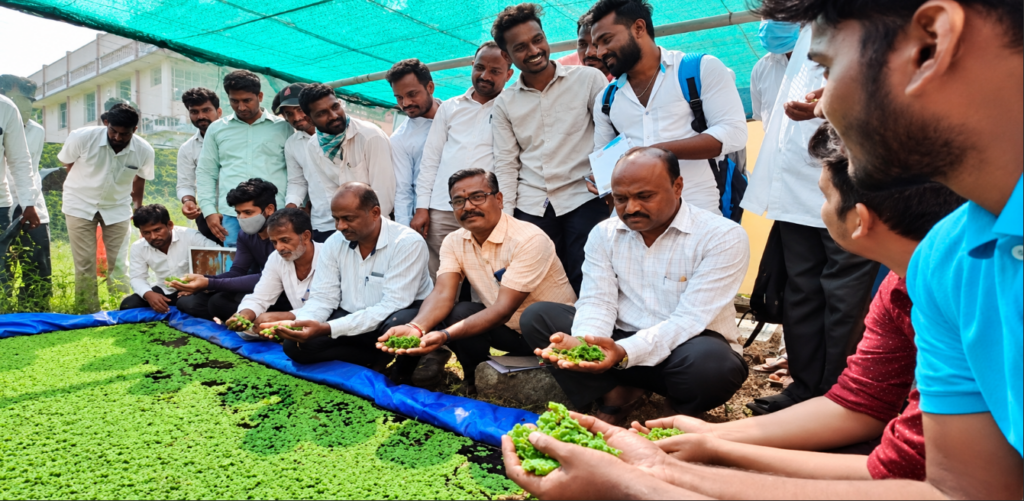
Because conventional fodder grasses demand 50 to 60 days to mature, integrating rapid, low-water alternatives like Azolla a nutrient-rich aquatic fern has become critical for sustaining dairy productivity and livestock health, according to Chief Secretary Dr. Shalini Rajneesh.
Growing rapidly in symbiosis with nitrogen-fixing cyanobacteria (Anabaena azollae), Azolla offers 15% to 35% crude protein on a dry-matter basis, alongside beta-carotene, calcium, phosphorus, iron, and essential amino acids. While not a standalone substitute, it functions effectively as a supplementary feed that enhances digestion and milk yields. Recommended daily dosages include 1.0–1.5 kg for adult cows and buffaloes, 200–300 grams for goats, and 10–15 grams for poultry, substituting roughly 10% to 15% of conventional concentrated feed.
Cultivation requires minimal space and can be established near cattle sheds. Farmers can excavate a pit measuring 2.6 m by 1.6 m with a depth of 1 meter in a shaded location, lining it with a 450 GSM UV-stabilized HDPE sheet. The bed is prepared using rotten soil, manure, superphosphate, a mineral mixture, and water maintaining a pH between 5.5 and 7. After introducing 0.5–1 kg of starter culture, the system yields approximately 1 kg of fresh biomass daily from day 10–15 onwards. Azolla must be washed thoroughly to eliminate dung traces before feeding to livestock.
Setting up a single cultivation unit costs ₹3,150 comprising ₹2,450 for materials and ₹700 for labor. For the 2026–27 financial year, the state government has allocated ₹3.78 crore to establish 12,000 units across 240 taluks in all 31 districts. Starter culture is accessible through Krishi Vigyan Kendras (KVKs), agricultural universities, and veterinary institutions at approximately ₹50 per kg.
To institutionalize village-level fodder security, the administration has earmarked ₹25 crore under the Mahatma Gandhi National Rural Employment Guarantee Scheme (MGNREGS).
This program will distribute 4,72,114 fodder seed mini-kits to farmers equipped with irrigation. Through formal memorandums of understanding, the government plans to procure surplus fodder from these producers and redistribute it to livestock owners facing critical shortages, establishing an equitable, community-driven pastoral support network across drought-prone areas.