


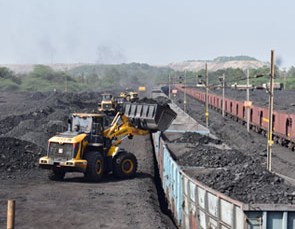
Blurb: The Coal India subsidiary has expanded production, productivity, rail connectivity, mechanisation, digital systems, CSR initiatives and environmental efforts across Chhattisgarh and Madhya Pradesh
New Delhi
The South Eastern Coalfields Limited (SECL) is contributing approximately 23 per cent of Coal India Limited’s (CIL) output and registered around 17 per cent of India’s total coal production in FY 2025-26, the government said on Saturday.
Under the leadership of Prime Minister Narendra Modi, India’s coal sector has undergone a far-reaching transformation since 2014, propelled by a series of policy and structural reforms of the Centre aimed at enhancing transparency, efficiency, technology adoption, infrastructure development, ease of operations and energy security.
These reforms have accelerated decision-making, modernised mine planning, strengthened evacuation infrastructure, and lifted productivity across the sector. The outcome is visible at the national level, according to the Coal Ministry.
India’s domestic coal production crossed the landmark 1 billion tonne (BT) mark for the second consecutive year in FY 2025-26, reaching 1.04 BT (provisional), as coal continues to power about 73 per cent of the nation’s electricity generation and ensure energy security for the nation.
SECL, a Mini Ratna subsidiary of Coal India Limited (CIL) operating across the coalfields of Chhattisgarh and Madhya Pradesh, has been one of the principal architects of this national achievement.
From an ordinary coal production of 34.2 MT in its year of inception (FY 1985-86), SECL has transformed itself into a major coal behemoth producing 176.28 MT of coal in FY 2025-26.
Coal production has risen from 124.26 million tonnes (MT) in 2013-14 to 176.28 MT in 2025-26, a year in which the company also recorded coal offtake of 178.63 MT across 13 states, up from 122.03 MT in 2013-14, a growth of over 46 per cent.
What stands out most is the leap in productivity. Output per Man-Shift (OMS), the key measure of mining efficiency, has more than doubled, from 7.23 tonnes in 2013-14 to 16.47 tonnes in 2025-26, said the government.