


BLURB-
Supreme Court holds special Lok Adalat with judges and lawyers to settle long-pending cases and reduce the court’s growing backlog.
New Delhi
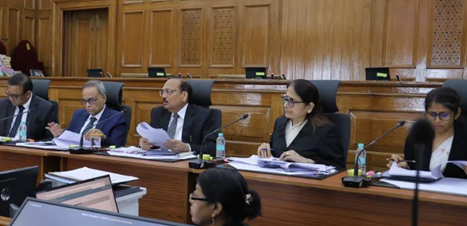
The Supreme Court on Friday held a special Lok Adalat bringing judges, lawyers and senior advocates together to settle long-pending disputes. The exercise marked the first time lawyers joined judges on the bench during the process. The initiative began as part of a three-day effort to reduce the court’s growing case backlog.
Judges heard matters involving banking, matrimonial disputes, motor accident claims, consumer compensation, labour issues, RERA cases, cheque disputes, property matters, taxation and service-related cases. Litigants appeared either physically or through virtual proceedings. Judges also checked whether parties accepting settlements had agreed freely and without pressure before disposing of cases.
The special hearing was part of the Supreme Court’s SAMADHAN Samaroh, with proceedings scheduled to continue on Saturday and Sunday. Nearly 15 benches participated after completing the court’s regular business. Chief Justice of India Surya Kant headed one bench with Justices Joymalya Bagchi and V Mohana. Senior lawyers also assisted the bench during the proceedings.
The court also took up several old public interest litigations during the day. Matters related to oxygen supplies during the Covid-19 pandemic, vaccination for vulnerable groups, employment schemes, nurses’ service conditions and migrant children were addressed. Petitions challenging the repealed farm laws and the imposition of President’s Rule in Jammu and Kashmir were also dismissed as infructuous.
The special Lok Adalat followed preparations that began about four months ago, when the Supreme Court invited lawyers and litigants to seek settlements. Most matters heard on Friday were settled, disposed of or withdrawn. The court also identified tax cases involving faceless assessments for further hearing. Settlements reached during the three-day exercise will have the force of judicial orders, providing parties a quicker way to resolve their disputes.