CH NEWS, MANGALURU
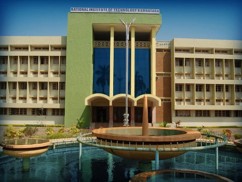
A total of 1,066 BTech students joined this academic year, comprising 834 male students and 232 female students. Addressing the gathering, Director Prof B Ravi told students that the next four years will bring profound changes in the world, which will shape their careers and life choices. By 2030, your real competition for jobs may not be from fellow students, but from AI, he said, noting that artificial intelligence already outperforms humans in logical left-brain capabilities such as reading, writing, remembering, locating, translating and monitoring. He urged students to work on their right-brain capabilities, curiosity, creativity, intuition, emotion, empathy, ethics, context, judgement, nuances and non-verbal communication, and combine these with AI to succeed in the future world.
Prof Ravi highlighted that the institute’s newly redesigned curriculum, developed over the past three years, is built to strengthen such human capabilities. Alongside theory and lab courses, students will undertake four categories of life-skill activities, physical (sports), cultural (creative arts), technical (model fabrication) and professional (communication).
He also pointed to a stronger institutional focus on innovation and entrepreneurship. Students can pursue a parallel minor programme covering product design, fabrication and business plan development, supported by NITK’s alumni as mentors, co-founders and investorsDeputy Director Prof Subhash Yaragal congratulated the incoming batch. The deans, chief warden and other Institute functionaries delivered presentations on NITK’s academic structure, research opportunities, campus facilities and student life. The UG Induction Programme is designed to enable a smooth transition for new students into the institute’s academic and cultural environment. A separate programme was organised for more than 1,500 parents who came to the Institute. They were given a tour of the institute facilities, followed by addresses by the Institute functionaries. The parents were urged to partner with the Institute in the progression of their wards, and to regularly keep in touch with them.