


Islamabad
Pakistan’s security forces have carried out coordinated ground and air operations along the Afghanistan border, claiming to have killed at least 29 militants linked to extremist groups. However, Afghanistan’s Taliban-led government has accused Pakistan of causing heavy civilian casualties during the strikes, alleging that at least 38 civilians lost their lives and more than 160 others were injured.
The conflicting claims have further strained relations between the neighboring countries and raised concerns over renewed instability along their shared border.
The latest military action marks Pakistan’s second round of airstrikes inside Afghanistan in recent months. The operations targeted locations in the eastern Afghan provinces of Paktia, Paktika, and Kunar, where Pakistan says militant groups have established camps and safe havens. According to Pakistan’s Information Minister Attaullah Tarar, the airstrikes killed 25 militants and destroyed large quantities of weapons, ammunition, and other military equipment believed to be used in cross-border attacks.
In addition to the aerial operations, Pakistani security forces conducted ground raids in the Bajaur district of Khyber Pakhtunkhwa province. Officials stated that four militants associated with the Jamaat-ul-Ahrar faction, an offshoot linked to the Pakistani Taliban, were killed during the operation. The government described the combined actions as a necessary response to increasing terrorist threats targeting Pakistan.
Pakistan said the strikes were launched following a series of recent militant attacks, including a bomb and gun assault on a Sindh Rangers facility in Karachi on Saturday. The attack reportedly killed three security personnel and injured four others. Authorities said intelligence gathered after the incident pointed to militant infrastructure operating from across the Afghan border, prompting immediate military action.
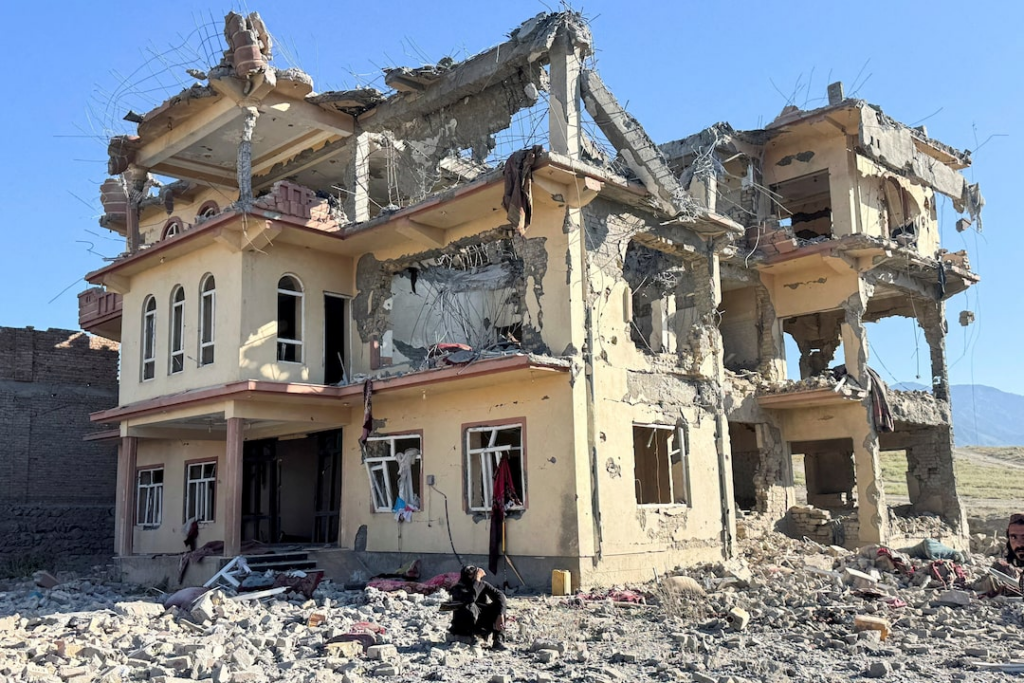
Afghanistan’s Taliban administration has strongly disputed Pakistan’s account of the operations. Government spokesperson Hamdullah Fitrat claimed that the strikes primarily affected civilian areas rather than militant hideouts. According to Afghan officials, one airstrike on a residential home in Paktia province killed 28 civilians and injured 158 others, including women and children.
Local authorities in the affected district further alleged that a second airstrike occurred while residents were attempting to rescue victims from the initial bombing. District official Khalid Ahmad Sajad stated that emergency responders and local residents were helping the injured when another strike hit the same location, increasing the number of casualties and complicating rescue efforts.
The latest exchange highlights the continuing disagreement between Islamabad and Kabul over militant activity along their shared border. Pakistan has repeatedly accused the Afghan Taliban of allowing extremist groups to use Afghan territory to plan and launch attacks inside Pakistan. Afghan authorities have consistently rejected those allegations, maintaining that militancy within Pakistan is an internal security issue and denying that they provide shelter to armed groups.
Relations between the two countries have deteriorated steadily over the past several years despite their previous cooperation. Analysts warn that continued cross-border military operations and conflicting narratives over civilian casualties could further damage diplomatic ties and increase the risk of broader armed confrontations along the volatile frontier.