


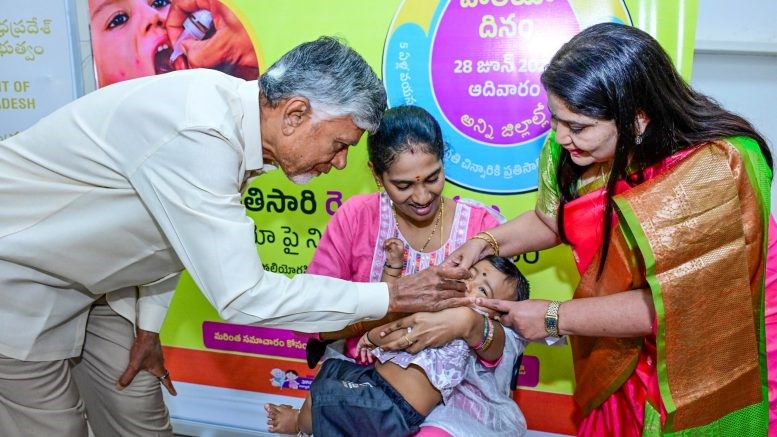
Intro: Launching the three-day Pulse Polio drive to cover 49.2 lakh children under five, the AP CM said the govt was offering incentives to families to have two or more children.
Amaravati
Andhra Pradesh Chief Minister N. Chandrababu Naidu on Sunday strongly advocated for the revival of India’s traditional joint family system, describing it as one of the nation’s greatest social strengths.
Speaking during the launch of the Pulse Polio Immunisation Programme at his official residence, the Chief Minister highlighted the important role that extended families play in nurturing children with strong values, emotional support, and a sense of belonging.
Naidu administered polio drops to young children to formally inaugurate the three-day statewide vaccination campaign. During the event, he interacted with parents and children, enquiring about their health, vaccination schedules, and overall upbringing. He urged parents to ensure that every child receives all government-recommended vaccinations on time to protect them against preventable diseases and promote a healthier future.
Officials from the Health and Family Welfare Department informed the Chief Minister that the state aims to administer polio drops to approximately 4.92 million children below the age of five during the intensive immunisation drive. The campaign has been launched with the objective of maintaining Andhra Pradesh’s commitment to eliminating polio and protecting children from the highly infectious disease.
While interacting with families, Naidu discussed the challenges faced by working parents in raising children, particularly in households where both parents are employed. He observed that balancing professional responsibilities with childcare can be difficult and stressed the importance of creating a supportive family environment.
The Chief Minister emphasized that childcare should never be viewed as the sole responsibility of mothers. He called upon fathers to play an equal and active role in raising children and encouraged grandparents and other family members to participate in their upbringing. According to Naidu, shared parenting not only eases the burden on parents but also contributes to the emotional and moral development of children.
Highlighting the cultural importance of joint families, he said that grandparents often pass on valuable traditions, ethics, and life experiences that help shape children’s personalities. He noted that children raised in supportive family environments are more likely to develop confidence, compassion, and strong social values.
Naidu also expressed concern over changing societal attitudes toward parenthood, observing that many families today hesitate to have children due to economic pressures and changing lifestyles. He urged people to view children as a source of happiness, strength, and hope rather than as a burden.