


Beirut
Lebanon’s rich cultural and historical heritage has sustained extensive damage following nearly four months of Israeli air and ground operations in the country’s southern region. Government officials have reported that numerous archaeological sites, religious landmarks, historic markets, and centuries-old villages have either been damaged or completely destroyed during the military campaign targeting Iran-backed Hezbollah fighters.
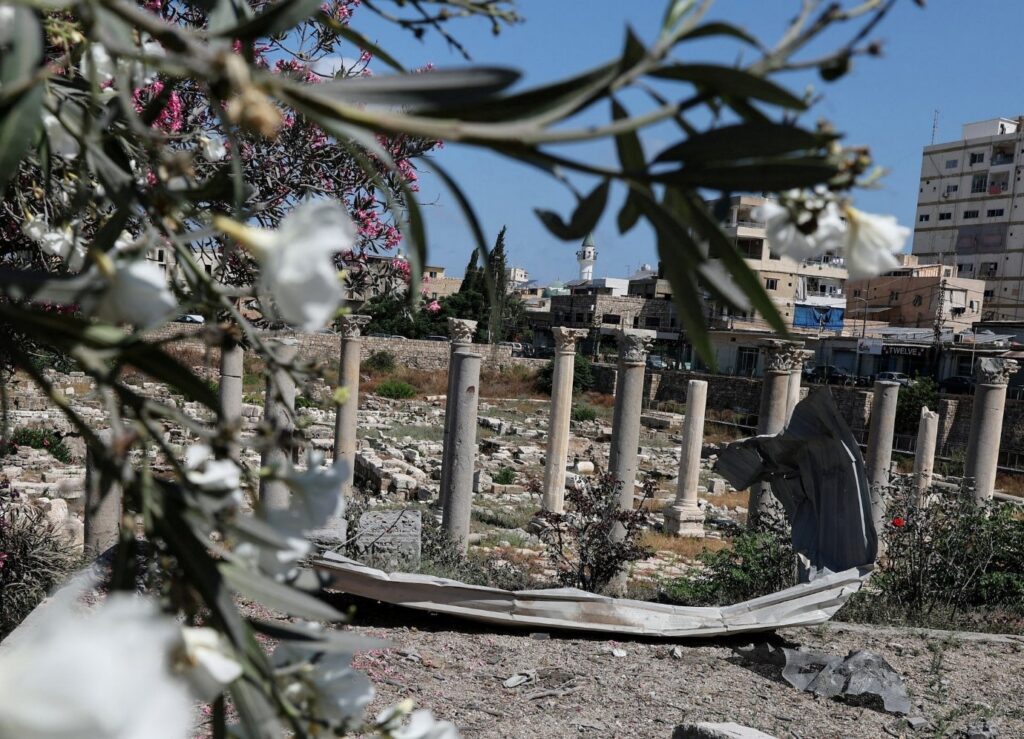
Among the most significant losses is damage to the ancient city of Tyre, a UNESCO World Heritage Site and one of the oldest continuously inhabited cities in the world. According to Lebanese authorities, the crown of an ancient Roman column was blown off during the conflict, while several other historical structures suffered varying degrees of damage. Tyre’s archaeological treasures, dating back nearly 5,000 years, represent the legacy of multiple civilizations, including the Phoenicians, Romans, Byzantines, and later empires that shaped the region’s history.
Lebanon’s Culture Minister, Ghassan Salame, stated that officials are still unable to fully assess the scale of destruction because Israeli forces continue to occupy a security zone extending approximately 10 kilometres into southern Lebanon. The restricted military zone remains inaccessible to Lebanese authorities, preventing heritage experts from conducting detailed inspections of affected sites.
Salame emphasized that the continuing military presence has delayed efforts to document and preserve damaged monuments. He expressed concern that many villages within the occupied area had reportedly been completely flattened, including communities that had long been home to Christian, Shiite Muslim, and Sunni Muslim populations living alongside centuries-old places of worship.
The occupation zone also includes Beaufort Castle, a prominent medieval fortress with enormous historical significance. Lebanese authorities fear that the castle and nearby heritage sites may have suffered substantial damage during military operations. Israeli officials have previously claimed that Hezbollah stored weapons within the fortress, an allegation strongly denied by Lebanese authorities.
Outside the occupied zone, several historic towns also experienced extensive destruction from aerial bombardments. In the southern city of Nabatieh, repeated airstrikes heavily damaged the historic Mamluk-era market, a cultural landmark that had served local communities for generations. Another important pilgrimage site, visited by both Muslim and Christian worshippers, was reportedly destroyed in a separate southern town.
The town of Tebnin also experienced heavy bombardment, raising concerns about possible damage to its Crusader-era fortress, another important historical monument. Heritage experts have warned that many cultural treasures may have been irreparably damaged before comprehensive assessments can be completed.
Salame stressed that cultural heritage extends far beyond ancient archaeological ruins. He explained that historic residential buildings, traditional markets, religious monuments, archaeological sites, and structures serving important cultural functions all represent valuable components of Lebanon’s national identity that deserve protection during armed conflict.