


Blurb
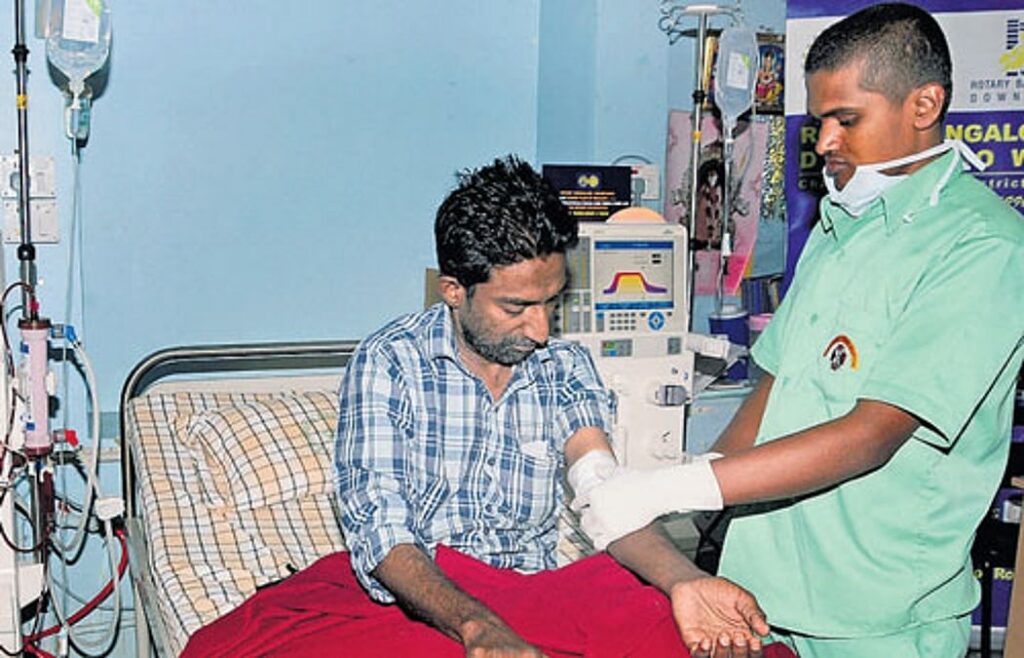
In recent years, male students have entered nursing in larger numbers, driven by strong job prospects and overseas opportunities.
CH NEWS
BENGALURU
A significant shift is underway in Karnataka’s healthcare education sector, with nursing—traditionally viewed as a female-dominated profession—witnessing a sharp rise in male participation. Data from the recent convocation of the Rajiv Gandhi University of Health Sciences (RGUHS) shows that men accounted for nearly 33 per cent of BSc Nursing graduates, reflecting changing career preferences and expanding employment opportunities.
Of the 31,057 students who graduated in 2026, more than 10,000 were men pursuing nursing courses. The increase is striking when compared with 2021, when only 1,838 male students graduated among a total of 10,804 nursing graduates. The figures represent a growth of over 450 per cent in male enrolment and graduation over five years.
Among all health science disciplines, only MBBS and B Pharmacy remained male-dominated in 2026. In MBBS, the gender gap continued despite minor fluctuations over the years. This year, 4,125 male students graduated compared with 3,712 female students. Since 2022, the average gap between male and female MBBS graduates has remained around 465 students.
In B Pharmacy, 3,720 male students graduated compared with 2,991 female students, indicating that the gender difference is gradually narrowing. Dentistry, however, continued to attract more women, with 1,752 female graduates against 727 men in the Bachelor of Dental Surgery (BDS) programme.
Education experts and nursing administrators attribute the growing interest among men to assured employment and attractive opportunities abroad. S. Shivakumar, president of the Karnataka State Association of Managements of Nursing and Allied Health Sciences Institutions, said male nurses are increasingly preferred in sectors such as airports, industries, ambulance services, home healthcare and hospitals that require round-the-clock staffing.
According to him, many nursing graduates secure jobs immediately after registration, gain experience for a year and then move overseas, where salaries are significantly higher. He also noted a strong influx of male nursing students from Kerala, where the profession has long enjoyed acceptance among men.
Ali Khwaja, founder of Banjara Academy, said nursing is increasingly seen as a practical alternative by students who may not secure MBBS admissions. Growing international demand and perceptions of better career stability have further enhanced its appeal.
BOX: Job security driving demand
“There is a strong demand for nursing and allied health courses. Students can find employment almost immediately after graduation. Countries such as Japan, Australia and Germany are actively seeking nurses. While many sectors are witnessing saturation, healthcare continues to expand rapidly. The biggest attraction today is job security,” said Dr B.C. Bhagavan, Vice-Chancellor of RGUHS.