


Moscow
The recent BRICS Foreign Ministers’ Meeting held in New Delhi under India’s 2026 chairship successfully maintained focus on its core agenda despite ongoing geopolitical tensions, particularly the conflict in West Asia, according to a report by the Politeia Research Foundation (PRF).
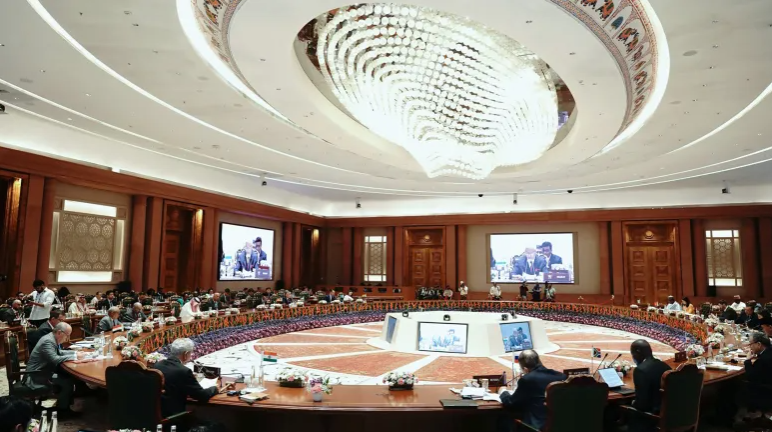
The meeting, held on May 14–15, brought together member countries including India, Brazil, Russia, China, and South Africa, alongside newer members such as Iran and the UAE. While deep divisions emerged over the Gulf conflict, the bloc managed to avoid breakdown in dialogue and instead issued a Chair’s Statement and Outcome Document rather than a joint communique.
India’s Sherpa for BRICS and Secretary in the Ministry of External Affairs, Sudhakar Dalela, said the document reflected broad consensus across most issues, despite differences on regional conflicts. External Affairs Minister S. Jaishankar acknowledged that members held “differing views” on the situation in West Asia but emphasized the importance of continued engagement.
According to the report, discussions at the meeting were marked by tensions, with some members exchanging strong views on the ongoing war involving Israel, the US, and Iran. However, there was agreement on the need for diplomatic solutions, respect for sovereignty, and protection of civilian lives.
The bloc also converged on several global governance priorities, including maritime security, safe trade routes, disaster management, food security, and Digital Public Infrastructure. The document also highlighted support for reforms in global institutions such as the United Nations Security Council.
Observers noted that despite predictions of internal fractures due to geopolitical rivalry, BRICS demonstrated resilience by keeping its institutional agenda intact. The report suggested that “quiet and smart diplomacy” will be essential ahead of the upcoming BRICS summit in Delhi scheduled for later this year.
Analysts say the meeting reflects BRICS’ evolving role as a platform balancing competing national interests while attempting to shape a multipolar global order amid rising international tensions and shifting alliances.