


Vijayapura
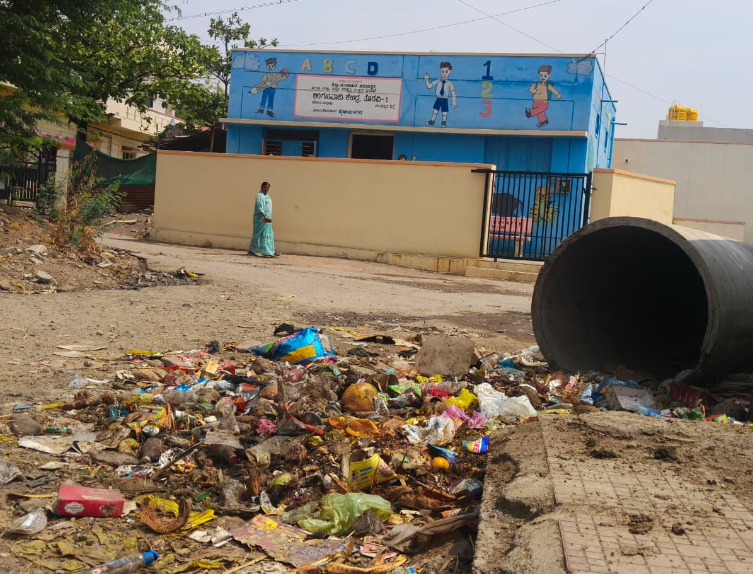
Vijayapura’s Toravi Gram Panchayat has come under sharp criticism from residents who allege widespread civic neglect, poor sanitation management, and administrative failure. Locals say the village has deteriorated to a point where “it begins and ends with garbage,” highlighting long-standing concerns over cleanliness and public health.
Residents report that heaps of garbage are visible even near the Gram Panchayat office, raising questions about how authorities can promote cleanliness when their own premises remain unhygienic. The situation near the Anganwadi centre has further worsened public anger, with waste dumped in front of the facility where young children regularly study and play, increasing fears of disease outbreaks.
Villagers allege that repeated complaints regarding sanitation, encroachments, and civic issues have been ignored for years. They claim the administration has failed to maintain basic civic standards or take corrective action despite continued public distress.
Footpaths in the area have reportedly been obstructed by garbage and encroachments, forcing pedestrians—including schoolchildren, women, and elderly residents—to walk on busy roads, increasing the risk of accidents.
Residents have also raised concerns about the alleged sale of tobacco products near educational institutions, which they say violates legal restrictions on tobacco sales within 100 yards of schools. Despite this, shops near the Government High School continue to operate openly, according to local complaints.
Another major grievance is the absence of basic infrastructure such as a proper bus shelter. Daily commuters, including students and workers, are forced to wait under harsh weather conditions, with temperatures in the region often exceeding 40°C during summer.
Frustrated villagers have questioned the effectiveness of the administration, asking how basic responsibilities like sanitation, law enforcement, and public facility provision remain unaddressed despite repeated appeals.